Skip to content

Case study · Zaragoza, Spain

Daker Online: how we built a multiplayer poker game in Unity

A physical deck where every card has two values, turned into a social game for Android with six-seat tables, bots and a demo that runs in the browser.

We reply within 24 business hours.

18 A social game for adults (18+). No real-money betting and no cash prizes.

The deal

What Daker Online is, and who built it

Daker Online is a social card game for Android, built by OverFuture in Zaragoza, Spain, with Unity. It is the digital version of Daker Poker, a tabletop game with its own deck inspired by poker dice (the game's official site (opens in a new tab)).

Its deck changes the usual rules. Every card carries two values, and you can only use one of them. That opens up more hands, and the same cards can be read in several ways.

The game itself was its creator's idea. Our job was to turn it into a product: put the rules into code, build the online tables and ship it.

Want a game like Daker? Tell us your idea

We reply within 24 business hours.

Genre
Social card game
Platforms
Android and web demo
Engine
Unity 6 and C#
Multiplayer
Photon PUN 2, up to 6 per table
Services
Laravel and Firebase
Languages
Spanish and English
Development
OverFuture, Zaragoza
Rating
PEGI 18, simulated gambling

Project history

From a physical deck to an online table

  1. Before the app

    A tabletop game

    Daker already existed as physical cards, with a ranked table of 105 hands. That table is the foundation of the whole build.

  2. The mobile launch

    The first mobile version comes out. You play against a dealer controlled by the game. We wrote about it in the mobile launch post (in Spanish) (opens in a new tab).

  3. Online multiplayer

    We add online tables and rebuild the interface from scratch, with a leaderboard and customisation. More in the multiplayer post (in Spanish) (opens in a new tab).

  4. About a year after launch

    5 with Discard

    A second, faster mode arrives: five cards, up to four players and a discard of up to two cards.

  5. A demo in the browser

    We bring the game to WebGL so people can try it without installing anything. It is still maintained: the latest Google Play release is from March 2026.

First round · The rules engine

A hand evaluator for cards worth two values

In classic poker, each card has one value. In Daker, six cards with two values each can be read in many ways. The game has to find the best reading on every turn, for every player.

We solved it with data instead of writing a condition for every case. The 105-hand table is loaded into the game exactly as it is. With the six cards on show, the engine generates 1,736 combinations and removes the duplicates. Then it walks the table from top to bottom and keeps the first match.

That has a practical advantage for a game with its own rules. If the ranking of a hand changes, you edit one row and the logic stays untouched.

Daker hand table with 105 rows, from five aces down to a single black card
The table the game uses, from highest to lowest. See the full table

Engine test bench

Your cards

Community cards

With double valuesDealing…
If each card only had its top value…

1,736 combinations generated. The same algorithm as the game, rewritten for this page, with the real 27-card deck.

Second round · Multiplayer

A table that survives losing whoever runs it

Photon connects the players, but the game doesn't run on a server of our own. It is run by one of the players' phones, the Master Client. It deals, passes the turns, plays for the bots and closes each hand.

That design has an obvious weak spot: a phone can lose signal mid-hand. So every device keeps the last table state it received. If the host drops out, another player takes over, restores that table and replays the last move with the timers reset.

Anyone who disconnects has 25 seconds to get back to their seat, and the game retries every second. If the table stops sending signals, a watchdog warns the player and takes them out of the room ten seconds later. Nobody is left staring at a dead game.

Table in play

  • TRIPKINGSHost
  • LADYLUCKPlayer
  • OLDSCHOOLPlayer
  • COINFLIPBot
  • BIGBLINDBot
  • SILENTACEPlayer

Log

  1. TRIPKINGS loses connection mid-hand.
  2. OnMasterClientSwitched LADYLUCK becomes the Master Client.
  3. Restores the last table state received, as JSON.
  4. RPC_RecibirJugada_JugadorOnline replays the last move with fresh timers.

Sped-up simulation. The names in the log are the ones in the game's code.

Third round · Table rules

Bots that fill the table and pots that always add up

A game character with a helmet and a phone, similar to the table bots

There is always someone to play with

An online table needs people, and at certain times of day there aren't any. Up to five bots take the empty seats and give them up when a person joins.

They take between two and five seconds to decide, so the game keeps its pace. They play by the hand table, with an element of chance thrown in.

  • Up to 5 bots per table
  • 2–5 s per decision
  • No bots in games between friends

All-ins never leave the chips out of balance

A player who goes all-in with fewer chips can't win everything on the table. The game creates one pot per betting level and knows who is eligible for each one. We checked the maths against public pot calculators.

A real example from the tests: chips bet per seat

Seat A25
Seat B25
Seat C356
Seat D356
Main pot of 100, for all four seatsSide pot of 662, for C and D only

Fourth round · Unity WebGL

Bringing the game to the browser without a huge download

In October 2026 we released a demo you can play in the browser. The first build weighed 115.5 MB compressed and used 495 MB of memory, far too much for a demo.

We brought the size down in measured steps, one at a time. First we compiled for size and removed unused demos and folders. Then we capped the size of 130 textures and stripped exception stack traces. The game looks exactly the same.

On mobile we went further, with a second build. The page checks whether the browser supports ASTC textures and picks the build that suits it. The demo never touches real data either: a single switch cuts all its connections to production.

Unity game development at OverFuture (opens in a new tab)

Weighing the build

Compressed MB at each step

  1. First build (gzip)115.5
  2. Compile for size, with LTO110.0
  3. Unused demos and folders removed102.3
  4. 130 textures capped89.1
  5. Exceptions without stack traces86.3
  6. Final on desktop (DXT)85.4
  7. Final on mobile (ASTC)54.5
Memory, first build
495 MB
Desktop
320 MB
Mobile
166 MB

Measured on every build. The intermediate steps were linked without LTO to speed up testing.

The process

How we work on a game like this

  1. Rules before graphics

    We start with the hand table and the engine, which is what makes the game unique. Animations come later and never decide anything.

    Try it on the engine test bench
  2. A table that works offline

    Multiplayer mode also runs offline, with bots. That way we test whole hands without needing anyone else online.

    Watch the table simulation
  3. Force what almost never happens

    We left test switches in place to trigger situations that hardly ever come up in play, like the five-aces jackpot.

    See the five aces
  4. Ship and keep going

    A connected game doesn't end at launch. We keep it up to date with Android and Unity, and today the project runs on Unity 6.

    See the project history

The technology

What Daker Online is built with

  • Unity 6 and C#

    The whole game: 40 scripts of our own and 21,988 lines of code.

  • Photon PUN 2

    Rooms, messages between players and reconnection.

  • Laravel

    Accounts and player data on dakeronline.com.

  • Firebase Cloud Messaging

    Push notifications on the phone.

  • Anti-Cheat Toolkit

    Protects what the game stores on the device.

  • WebGL

    A browser demo, with DXT and ASTC builds.

If your idea is along these lines, see how we work on video game development (ES) (opens in a new tab), Android apps (ES) (opens in a new tab) and Unity projects (opens in a new tab).

Showdown · The result

What's on the table today

Daker Online is available on Google Play (opens in a new tab), and you can try it for free in the browser with the demo on the official site (opens in a new tab).

It has two modes: Daker Original takes up to six players and 5 with Discard up to four. It includes games with friends, a leaderboard and spectator mode. There are 53 avatars to customise your profile. It is available in Spanish and English.

How was it made? The development story (in Spanish) (opens in a new tab) · DAKER brand licensing (opens in a new tab) · See the project page (in Spanish) (opens in a new tab)

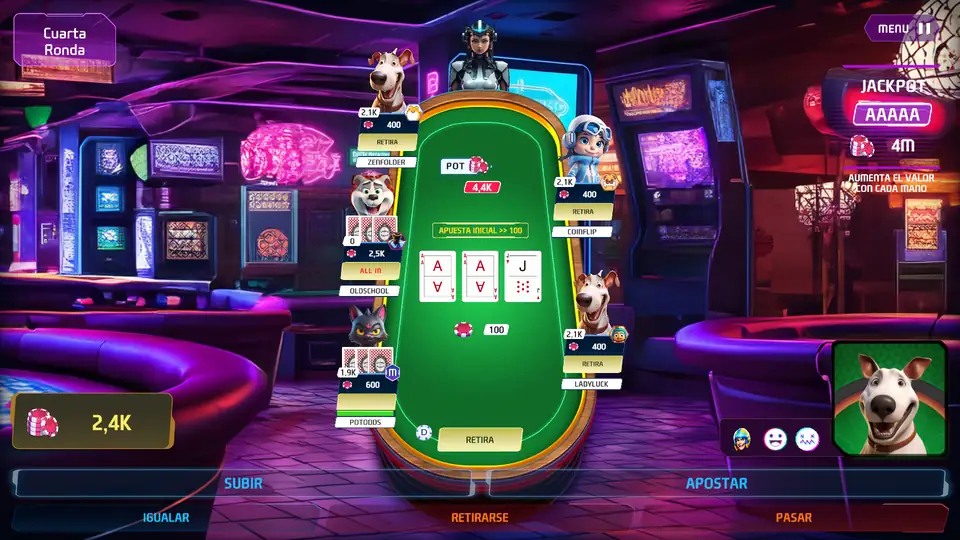
  • Daker Original table with six players and community cards
    Daker Original, up to six players.
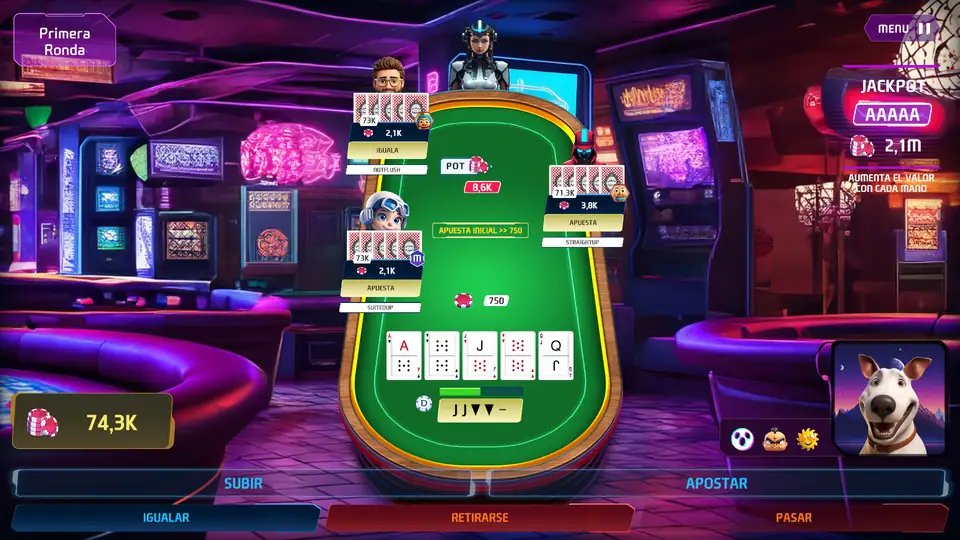
  • 5 with Discard table with five cards in hand
    5 with Discard, up to four.
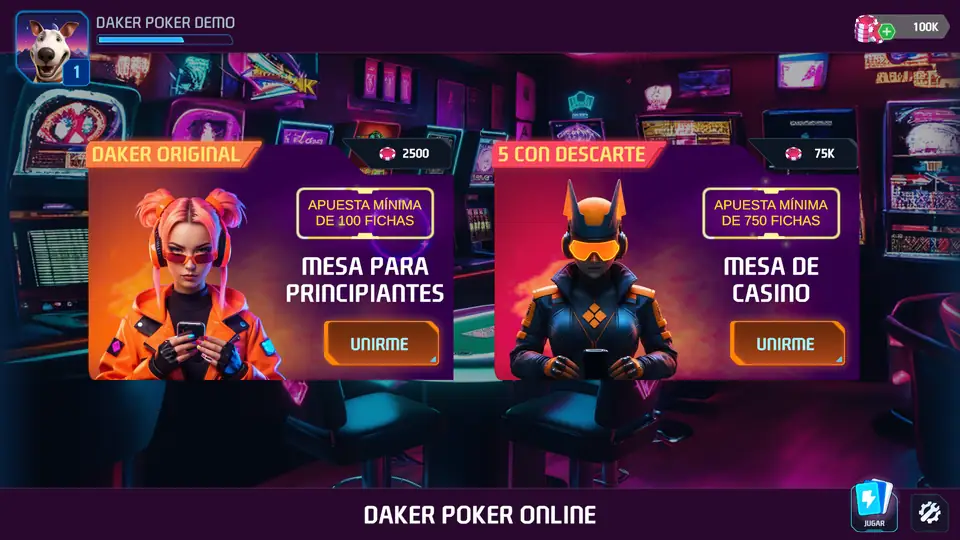
  • Daker menu with the Daker Original and 5 with Discard tables
    The web demo menu.

FAQ

What people ask us most about Daker Online

Who developed Daker Online?

OverFuture, a software and video game development company based in Zaragoza, Spain. We built the game in Unity, the multiplayer and the web demo, starting from the Daker Poker tabletop game.

Does Daker Online use real money?

No. It is a social game for adults (18+) with no real-money betting and no cash prizes. You play with virtual chips. Google Play lists ads and optional in-app purchases.

What technology is it built with?

Unity 6 and C#. Multiplayer runs on Photon PUN 2, accounts on Laravel and notifications on Firebase. The browser demo is a WebGL build.

Where can I play it?

On Android, from Google Play. In the browser, with the demo on the official site: dakeronline.com/playdemo.

How much does it cost to develop a multiplayer card game?

It depends on the scope. Our gamification and video game projects start at €2,000, excluding VAT. The final price depends on the mechanics, the levels, the art, the platforms and the multiplayer.

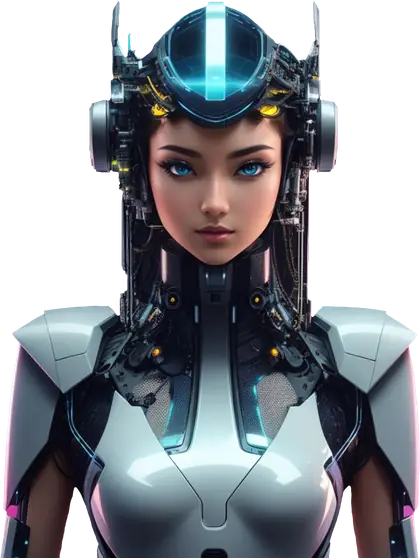
The Daker Online robot dealer
The dealer who runs the Daker tables.

Got a game or product in mind?

Tell us about it, even if it's still a deck of cards on a table. We reply within 24 business hours and suggest how to get started.