


Virtual reality for psychologists · Meta Quest 3
Virtual HHeroeSS: a virtual reality game for working on the social skills of children with ADHD
Created with the ANDAR Association's psychology team for children with ADHD, and for any young person. The child plays in a Meta Quest 3 headset while the professional follows the session on a laptop and rates each answer.
We reply within 24 business hours.
Want to use it in your practice? It is free and you request it from the ANDAR Association. How to get access

Waltraude, Habic and Nía, three of the game's voiced characters.
- Free for professionals, through ANDAR
- 4 learning activities
- 24 chapters in six kingdoms
- Meta Quest 3 and a laptop
What it is and who it is for
What Virtual HHeroeSS is, and who it is for
Virtual HHeroeSS is a cooperative virtual reality game for Meta Quest 3. It is a teaching tool from the ANDAR Association in Tudela, Spain, which supports people with ADHD and their families.
Its psychology team uses it in sessions to assess and train social skills and emotional intelligence. It is designed for children with ADHD, and it is also suitable for any young person who wants to work on self-awareness or managing their emotions.
It is always played with someone else. The young person wears the headset and a professional sits beside them; the game's word for this adult is "the escort", the person who accompanies the child. The artificial intelligence only ever runs with that professional present.
It is the virtual reality follow-up to Family HHeroeSS, the original game (opens in a new tab), which families played together on a phone. Both share the world of PandarA and its kingdoms.
Tell us about your project
To commission a tool of your own for your centre or organisation. We reply within 24 business hours.

- ANDAR psychology team
- Defines the goals, the questions and the conversations, and runs the sessions with each child.
- OverFuture
- Developed the game in Unity, with the voices, the AI, the multiplayer and the chapter system.
Want to use it in your practice or organisation? It is free and you request it from the ANDAR Association. See how to get access.
The teaching approach
Virtual reality for psychologists: how it is used in sessions
A Virtual HHeroeSS session involves two people in the same room. The child plays with the headset on.
The professional follows the game on a laptop connected to the headset by Air Link or cable. They see what the child sees and hear what they say, without having to enter the game.
From there they steer the session. In the dream world they also have their own panel to rate each answer.
Only one activity asks the professional to wear a headset
In three of the four activities the professional stays outside the game. Only the cooperative puzzle asks them to put on a headset and play as the escort. There are three design reasons for this.
- Headsets become tiring after a while.
- With one on, the professional can't pay attention to anything else.
- If they always had to wear it, the whole session would depend on them.
- QuizThe child plays. The professional listens to their answers.
- CombatThe child plays. The professional follows the story.
- Cooperative puzzleBoth play with headsets. You only progress by working together.
- Dream worldThe child talks. The professional decides on their panel.
It is not a substitute for therapy. Virtual HHeroeSS is a support tool in the hands of professionals. The association uses it as part of its work with each child, and this page makes no promise of clinical results.
The design principles

- No deaths, no coinsThe association asked for this at the first meeting. The hero has no lives to lose and there is no money to collect.
- Mistakes are not punishedIf an answer doesn't work, the character says so and you try again. When a potion goes wrong, the cauldron explodes and gives you a fright, but nobody loses.
- Almost no text on screenEverything is told by voice. The characters speak and the child answers by speaking or choosing with the controller.
- One attribute per kingdomEach kingdom works on one quality. In its dream-world chapter, a character explains it in their own words.
- Assess and trainThe quizzes show how the child reasons. The puzzles show how they cooperate with the adult.
- AI, always supervisedThe AI companion answers with the professional present. Only the text of the question reaches the AI: neither the audio nor the profile name leaves the headset.
How the characters explain their attribute
At the end of a dream-world conversation, the character sums up the quality that has been worked on. These are the game's own lines, in the original Spanish voices; the English text is our translation.
-

Tauriel · Friendliness Chapter 4
“Never forget that friendliness is what helps us get on with other people. When we're friendly, others feel comfortable with us and it's easier to make friends.”
-

Gerión · Resilience Chapter 11
“Always remember that resilience is the ability to overcome problems. When we face boring or difficult situations without giving up, we are being resilient.”
-

Waltraude · Courage Chapter 15
“Never forget that courage is what helps us be the person we want to be. The opposite of courage is fear.”
The transcripts cover the start of each clip. Audio plays only when you press Listen.
How to get access
What you need to use Virtual HHeroeSS
- Who can request itProfessionals and organisations that work with children and young people. You request it from the ANDAR Association, which owns the tool.
- How much it costsIt is free for professionals and organisations. It is distributed through a private channel, not through a store.
- What equipment you needA Meta Quest 3 headset and a laptop connected by Air Link or cable. For the cooperative puzzles, a second headset.
- Where to find out moreAt virtual.hheroess.com (opens in a new tab) and on the ANDAR Association (opens in a new tab) website (both in Spanish).
Would you rather have a tool of your own for your centre? That is something we do build: tell us about your project.
The four learning activities
Four types of activity, one per chapter
The game opens with a tutorial, "First steps", in which the Great Dragon welcomes the hero to the Floating Island of Aerin. Then come six kingdoms with four chapters each, one of each type.
-

Individual
Quiz
A character presents four everyday situations. The question is read aloud and three written answers appear; the child picks one with the trigger.
If an answer isn't the right one, the character says so and the test starts again.
Randra, chapter 13 · “A friend is picking on another boy who has just arrived in the village. What would you do?”
-

Individual
Combat
It moves the story along, but it is never the point. Animals run away and orcs fall asleep or turn into animals.
The hero cannot die. Only the last chapter, against Kaos, is a real battle.
Noirón, chapter 9 · “Take this bow here: it's enchanted with a sleep spell.”
-

With the escort, online
Cooperative puzzle
An escape room for two. You have to press two distant buttons at the same time, pour three flasks in order or guide the other player with a map.
Neither of you can solve it alone. It is the only activity in which the professional puts on a headset.
Dáramir, chapter 3 · “You must press the two simulation buttons, one on each side of the room, at the same time.”
-

Individual · with panel
Dream world
Conversations in natural speech. The child answers a character and the professional approves each answer, or not, from their panel.
The giants' meditation, with six rooms and a minute of calm in each, and the fairies' kindness circuit are also of this type.
Tauriel, chapter 4 · “Good morning, young one. How can I help you?”
Try the panel
Voices in Spanish, as in the game. The English quotes are our translation.
| Kingdom and attribute | Quiz | Combat | Cooperative puzzle | Dream world |
|---|---|---|---|---|
| Humans Friendliness | 1 The council awaits | 2 Learning to hunt | 3 The humans prepare for battle in the north | 4 Learning friendliness |
| Elves Wisdom | 5 The legendary knowledge | 8 Shoring up the shields | 6 Battle potions | 7 Showing your knowledge |
| Giants Resilience | 12 A dragon, all skin and bones? | 9 Jailers and the resilient | 10 Mining as a trade | 11 Meditating on a possible path |
| Valkyries Courage | 13 A tavern that smells of freshly showered troll | 14 The ghost kingdom | 16 Gateway to the Valkyrie kingdom | 15 Showing your courage |
| Fairies Kindness | 17 An unexpected emergency | 19 We have to run! | 18 Mission: save the fairies | 20 Your kindness, the best medicine |
| Orcs Determination | 21 Kingdoms of PandarA, unite! | 24 The fate of PandarA | 22 In a deep sleep | 23 The truth behind determination |
The number is the chapter's order in the game: each kingdom mixes the four types in its own order.
The map of PandarA
Six kingdoms, six attributes and their characters
Each kingdom works on one attribute of social skills and has its own characters, each with their own voice. Pick a kingdom and listen to who lives there (voices in Spanish, as in the game; English text is our translation).

Kingdom of the Humans
Attribute · Friendliness
Saying hello and goodbye, saying thank you, apologising, asking and answering.
- The council awaits Quiz
- Learning to hunt Combat
- The humans prepare for battle in the north Cooperative puzzle
- Learning friendliness Dream world
 NíaGuides the hero from the first chapter.
Hello! I see you've arrived at our great citadel. Quick! The council is waiting for us.
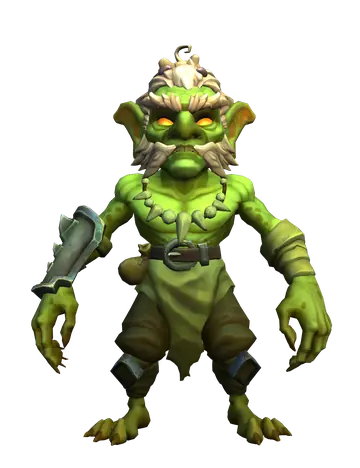 HabicThe goblin who teaches you to hunt.
But be careful: up the hill lives a witch, 'a bit odd'. Don't go into her hut without her permission.
 DáramirAssault commander.
We have to limit their trade! Raid their carriages, break their resistance, cut them off in their kingdom.

Kingdom of the Elves
Attribute · Wisdom
Knowing yourself, resolving conflicts, self-control and thinking ahead about consequences.
- The legendary knowledge Quiz
- Battle potions Cooperative puzzle
- Showing your knowledge Dream world
- Shoring up the shields Combat
 LáthienQueen of the elves.
We can't face the Orcs head-on; they are too powerful.
- TaurielPuts friendliness to the test in chapter 4.
Good morning, young one. How can I help you?
 The teacherTeaches elven sorcery and asks the child about themselves.
What do you like doing most?

Kingdom of the Giants
Attribute · Resilience
Coping with frustration, losing well and facing rejection without giving up.
- Jailers and the resilient Combat
- Mining as a trade Cooperative puzzle
- Meditating on a possible path Dream world
- A dragon, all skin and bones? Quiz
- GeriónOne of the giant twins, the blue-skinned one.
You did it! We must thank you for your resilience; you did really well. Keeping going is always important in any challenge.
 NoirónThe other twin, the red-skinned one.
These are the cells where we hold the Orcs. Personally, I don't think they're bad; they just act this way for some reason we don't know yet.
Gerión and Noirón are twins: very alike, but different. Their voices start from the same voice settings, with different modulation.

Kingdom of the Valkyries
Attribute · Courage
Making decisions, saying what you think and standing up for your opinions and for others.
- A tavern that smells of freshly showered troll Quiz
- The ghost kingdom Combat
- Showing your courage Dream world
- Gateway to the Valkyrie kingdom Cooperative puzzle
- WaltraudeThe great Valkyrie sorceress.
May the courage of the Valkyries be with us.
 SkógulThe Valkyrie warrior.
We need to get our courage back. We need your help.
 RandraThe honest Valkyrie.
We can't trust strangers, not yet. First they'll have to prove their courage to us. Are you up to it?

Kingdom of the Fairies
Attribute · Kindness
Recognising and expressing what you feel, understanding others and helping those who need it.
- An unexpected emergency Quiz
- Mission: save the fairies Cooperative puzzle
- We have to run! Combat
- Your kindness, the best medicine Dream world
 A nameless fairyArrives injured, asking for help, in chapter 17.
Help! Help! Have I made it in time?!
In “Your kindness, the best medicine” the hero runs a circuit against the clock. Along the way they can help those who need it, and they only pass the test if they do.

Kingdom of the Orcs
Attribute · Determination
Keeping up the effort, following through on what you set out to do and learning from mistakes.
- Kingdoms of PandarA, unite! Quiz
- In a deep sleep Cooperative puzzle
- The truth behind determination Dream world
- The fate of PandarA Combat
 KargThe orc chief, trapped in his own cage.
If only you could listen to me for one second!
 KaosThe demon who returns from the first game.
Did you think you were done with me? Long time no see! HHeroeSS like you have no place in this world. Surrender to my dark power!
The orcs are not simply evil. Karg asks for help to break free of Kaos, and the last chapter is won with the determination of every kingdom.
Try it · The dream world
The professional's panel, with the game's voices
In the dream world the child talks to a character who has their own voice. The game does not decide whether an answer is good enough. The professional decides, from a panel that only they can see.
Each chapter has its own panel. The character responds with a recorded line for each case: it may press the point or restart the conversation.
- Chapter 4, Tauriel. A polite, rude or off-topic answer. With a rude one, the conversation restarts after a fade to black.
- Chapter 15, Waltraude. A complete, incomplete or off-topic answer. With a complete one, she asks how you will show it in the future.
- Chapter 7, the teacher. The panel lets her ask "Why?" as many times as the professional wants.
The lines play in the game's voice (in Spanish) and appear in English in the speech bubble. You can turn the sound off.
Be the professional: choose a chapter, press "Start" and rate each answer as you imagine it.
Tauriel · Chapter 4, Learning friendliness
Press "Start" and Tauriel will greet you.
Conversation not started
Professional's panel only the accompanying adult sees it
Session log
- The character waits. The panel turns on when they finish speaking.
Lines and audio from chapters 4 and 15, in Spanish; the English text is our translation. This demo does not use your microphone.
Voices and artificial intelligence
Characters who talk and an AI companion
A voice for every character
The voices were generated with artificial intelligence in ElevenLabs and modulated one by one in Audition. The avatars' lips move as they speak, via SALSA LipSync, and they show emotions.
Every line in the script has an identifier that ties it to its audio. That is why this page plays the same lines you hear in the headset.
An AI companion, always supervised
In chapter 5 the elves offer the hero a companion for the rest of the journey. It can be a werewolf, an ent or a forest dragon, and you can ask it questions out loud.
To talk, you hold down the A button on the controller, like a walkie-talkie. Speech is turned into text on the headset itself with Vosk, and the question is sent along with the chapter's context.
OpenAI answers and Overtone turns the answer into the companion's voice. Always with the professional present, listening to what the child asks and what they are told.
Only the text of the question, already transcribed in the headset, reaches the AI, together with the chapter's context. Neither the audio nor the profile name leaves the headset.
What the companion hears
Choose a companion and a chapter, and see what the AI receives and in what order.
- A button The microphone opens while you hold it down.
- +0.5 s When you let go, it listens for half a second more to catch the last word.
- Vosk Speech is turned into text on the headset itself.
- Context The player's location is added.
- OpenAI Answers with that context in front of it.
- Overtone The answer becomes speech and the companion says it.
The real template from the code, with the chapter's data (translated from Spanish)
[personality of the werewolf]. We are currently playing “Chapter 05: The legendary knowledge”. In the current chapter the protagonist must “The time has come to meet the one who will be your friend forever”. The chapter is divided into several objectives; in the current objective the protagonist must: [help text of the active objective]. We are currently in the kingdom of the “Elves”.
The sentence follows the template in the game's code, with the real data for each chapter. This page does not call any AI.
Project history
From a family game to therapy sessions in virtual reality
Family HHeroeSS
The association creates its first video game, for families to play together on a phone. It is presented in Tudela in May 2021. We cover it on the original game's page (opens in a new tab).
TDAH Virtual Fit
A first step into virtual reality, with five mini-games for Meta Quest 2. We cover it in the TDAH Virtual Fit project (in Spanish) (opens in a new tab).
Virtual HHeroeSS begins
The saga moves to Meta Quest 3 with the Innova Programme of Fundación Caja Navarra and Fundación "la Caixa".
Trailer and launch
Trailer in April and launch with Fundación Caja Navarra in June. It is on the project page (in Spanish) (opens in a new tab).
How we developed it
Virtual reality with Unity 6 for Meta Quest 3
Two people in the same chapter
The cooperative puzzles use Photon PUN 2 with two-player rooms. In a headset, cooperating means touching the same things, so the buttons in the scene are physical objects built with HurricaneVR.
When a hand touches a button, that player requests ownership of it and the physics is calculated on their headset. Doors that need simultaneous presses open when as many buttons are pressed as there are players.
24 chapters from 14 building blocks
Each chapter is a list of objectives, and each objective is a reusable building block. There are 14 types built on a shared base, such as walking, picking up objects or meditating.
The meditation block asks for 60 seconds inside a calm zone, and a gong sounds at the end. With these blocks, we and the association can put together new chapters without writing code.

The cooperative chapters' guide
“Welcome to your first multiplayer chapter! To start playing, first you'll need to connect to the server.”
- 1The child and their escort enter the same room.
- 2A hand touches the button and requests ownership.
- 3With two buttons pressed and two players, the way opens.
Unity 6 and C#
The whole game, with URP and 56 scripts of our own.
Meta XR SDK
Headset, controllers and hands on Meta Quest 3.
HurricaneVR
Physical objects and buttons you touch with your hands.
Photon PUN 2
Two-player rooms and shared state.
Vosk, OpenAI and Overtone
Speech to text on the headset, the companion's answers and its voice.
ElevenLabs and SALSA
The characters' voices and lip movement.
Related services
- VR developmentPhysics, hands and performance in the headset. (opens in a new tab)
- VR for education and trainingTools with a clear learning goal. (opens in a new tab)
- Games and apps for Meta Quest (ES)From prototype to headset. (opens in a new tab)
- Virtual reality in Zaragoza (ES)Built at our studio on Calle Pablo Remacha. (opens in a new tab)
The result
What you'll find in PandarA today
A tutorial and 24 chapters in six kingdoms, four learning activities and more than twenty characters with their own voices. It runs on Meta Quest 3, with a laptop to follow the session.
The association presents the tool at virtual.hheroess.com (opens in a new tab) and the original game at hheroess.com (opens in a new tab). Its website is asociacionandar.com (opens in a new tab) (all in Spanish).
Family HHeroeSS, the original game (opens in a new tab) · How was it made? The development story (in Spanish) (opens in a new tab) · See the project page (in Spanish) (opens in a new tab)
- Chapter 1 · The council awaits
- Chapter 8 · Shoring up the shields
- Chapter 12 · A dragon, all skin and bones?
- Chapter 13 · A tavern that smells of freshly showered troll
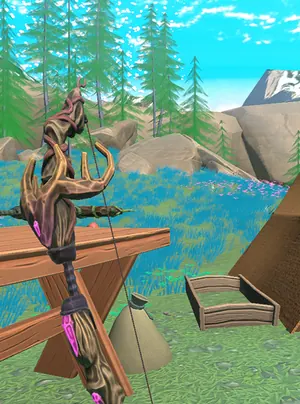 Chapter 2 · Learning to hunt
- Chapter 22 · In a deep sleep
FAQ
What people ask us most about Virtual HHeroeSS
Who is Virtual HHeroeSS for?
For children with ADHD and, more generally, for any young person who wants to work on their social skills, self-awareness or emotional management. It is used by professionals in sessions.
Is it played with a psychologist?
Yes. It is played in sessions with a professional alongside, who follows the game on a laptop. The ANDAR Association uses it with its psychology team.
Which skills does it work on?
Social skills and emotional intelligence, through six attributes: friendliness, wisdom, resilience, courage, kindness and determination, one per kingdom.
What role does the adult play?
In the game's terms, they are the child's escort. They follow the session, rate the child's answers in the dream world with their own panel and, in the cooperative puzzles, play alongside them with a second headset.
Does it replace therapy?
No. It is a support tool in the hands of professionals, who use it as part of their work with each child. It makes no promise of clinical results.
How is artificial intelligence used?
An AI companion answers the questions the child asks out loud, with the chapter's context. It always runs with the professional present. The characters' voices were also generated with AI.
How do I get access, and what do I need?
You request it from the ANDAR Association: it is free for professionals and organisations and is distributed through a private channel. You need a Meta Quest 3 headset and a laptop to follow the session.
Who developed Virtual HHeroeSS?
OverFuture, a software and video game development company based in Zaragoza, Spain. We built it in Unity for Meta Quest 3 with the ANDAR Association, whose psychology team defines its content.
How much does it cost to develop a virtual reality tool like this?
It depends on the scope. Our virtual reality apps start at €4,500, excluding VAT. The final price depends on the number of scenes, the level of interaction, the target devices and the 3D content.
Want a tool like this for your centre or organisation?
Tell us what you want to work on and with whom, even if it's still a list of goals on paper. We'll suggest how to bring it to a headset and where to start.
To use Virtual HHeroeSS, request it from the ANDAR Association (opens in a new tab). More of our work in Unity development (opens in a new tab).
We reply within 24 business hours.