
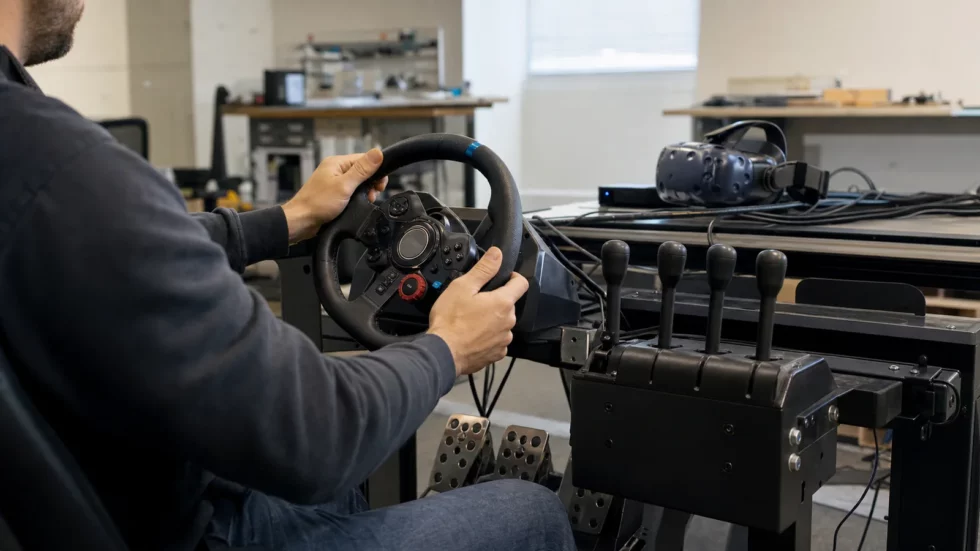
Why companies train in VR.
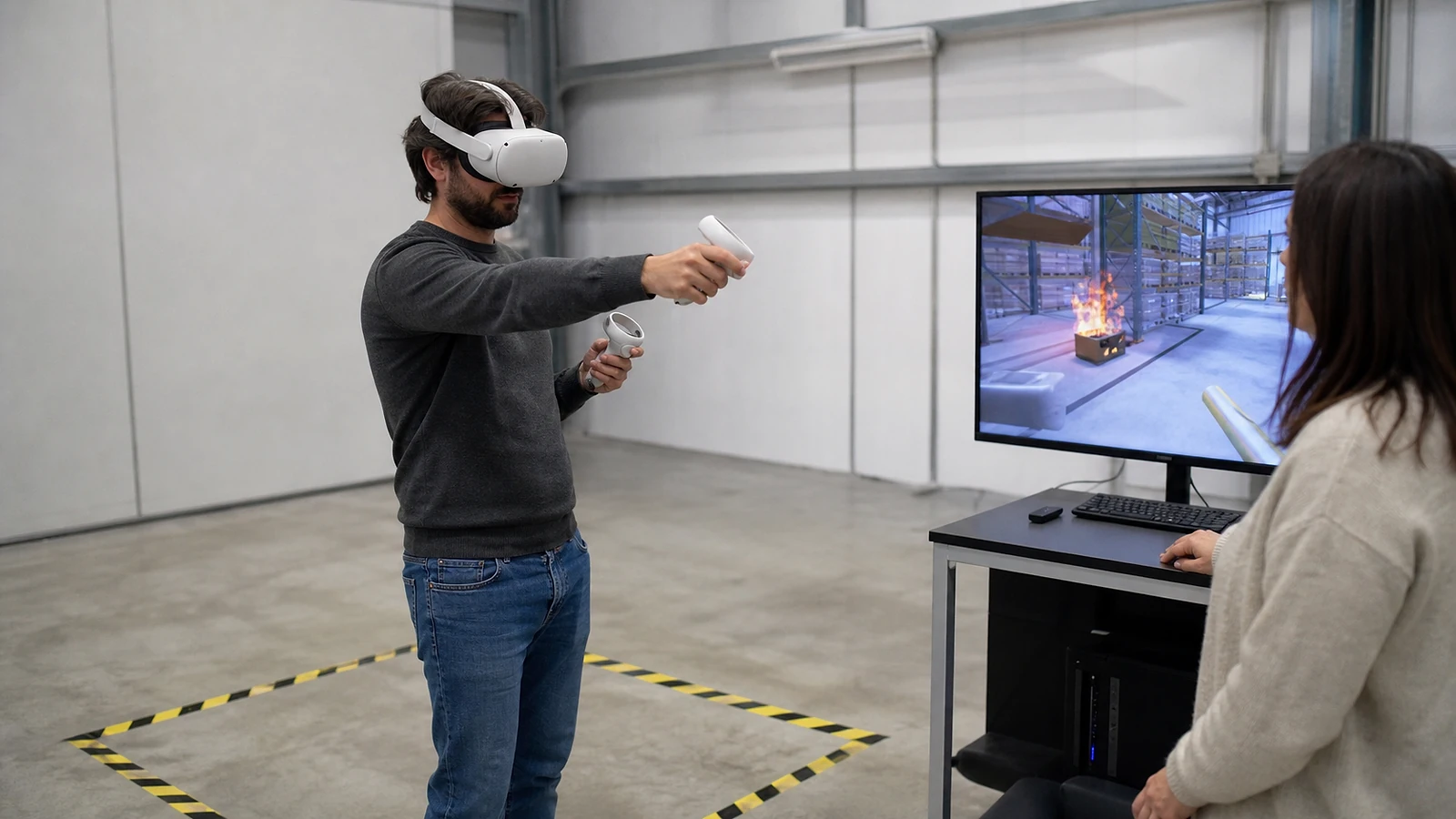
Hands-on training usually competes with production for the same machines, rooms and supervisors. VR moves part of that practice into a headset. In a headset nothing breaks and nobody waits for a free slot.
A World Bank review of VR training experiments found that VR is, on average, more effective than traditional training at developing technical, practical and socio-emotional skills. A 2024 meta-analysis in Safety Science found that VR safety training outperforms traditional training for knowledge acquisition and retention. We treat those results as a reason to pilot VR, not as a promise for your case.
What we build for training teams.
Procedure simulations
Step-by-step tasks that follow your own procedure.
Physical controls
A steering wheel, levers or pedals when the real task needs them.
Session review
A record of each attempt, so trainers see where people struggle.
Restartable exercises
Learners can restart an exercise as often as they need.
Headset builds
Standalone Meta Quest, or PC VR when the scene needs more power.
Classroom, video or VR training?
Each format has its place, and VR does not replace the others. It is worth its cost when the task is physical, risky or hard to stage for real. This comparison helps you decide where it fits in your programme.
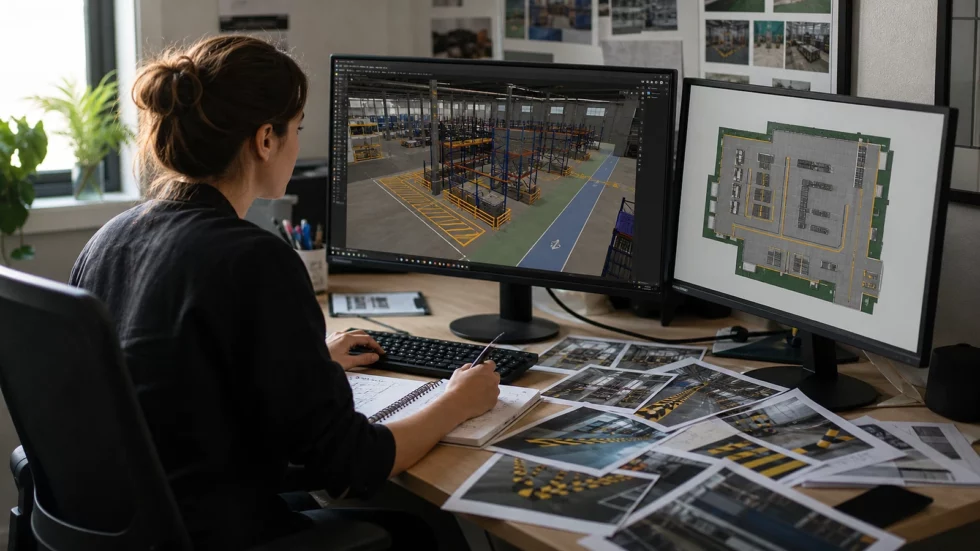
| Criterion | Classroom or video | VR training |
|---|---|---|
| Practice | Watching or describing the task | Doing the task in a simulated scene |
| Mistakes | Discussed afterwards | Made and corrected during the exercise |
| Repetition | Limited by trainer time | As often as the learner needs |
| Equipment | None | Headsets and, if needed, physical controls |
Projects behind this page.
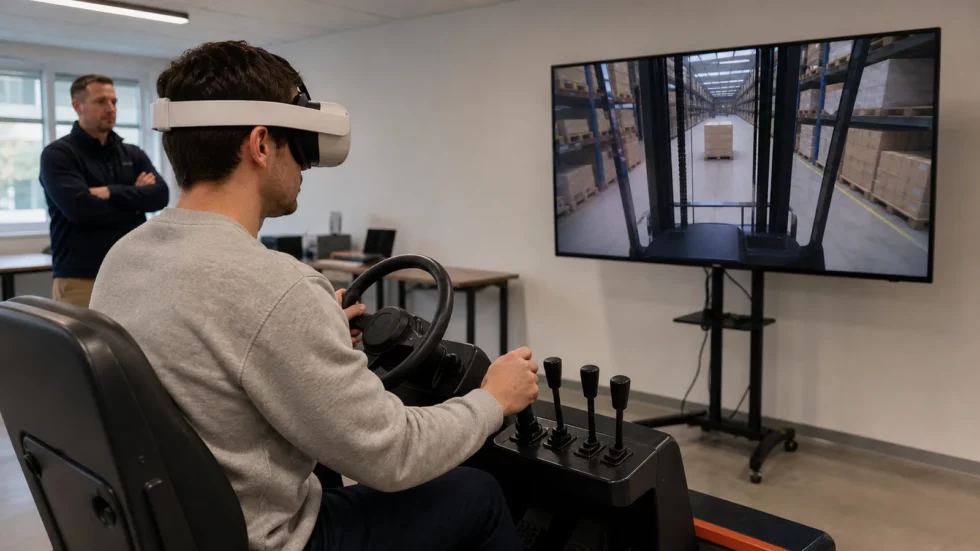
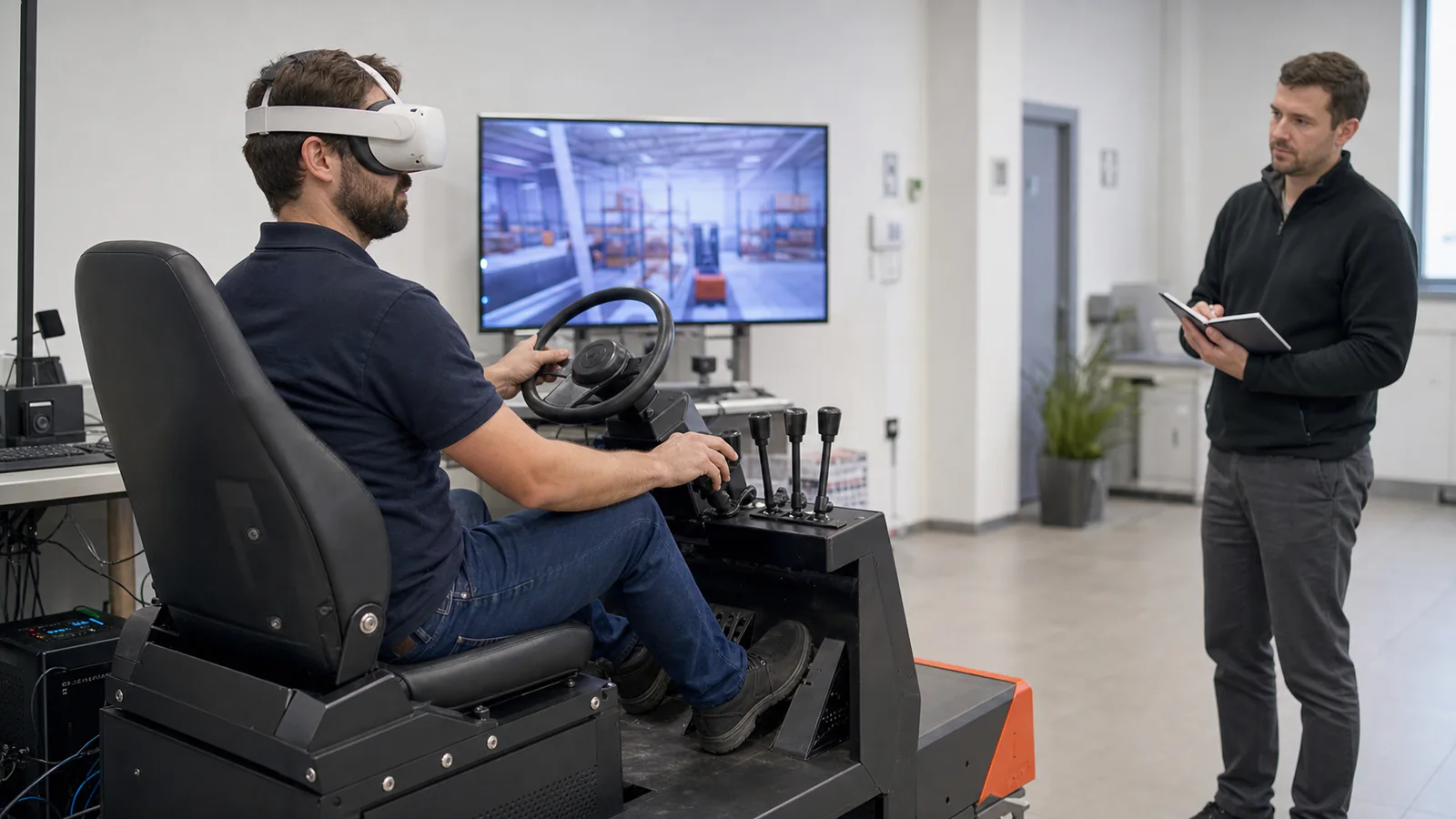
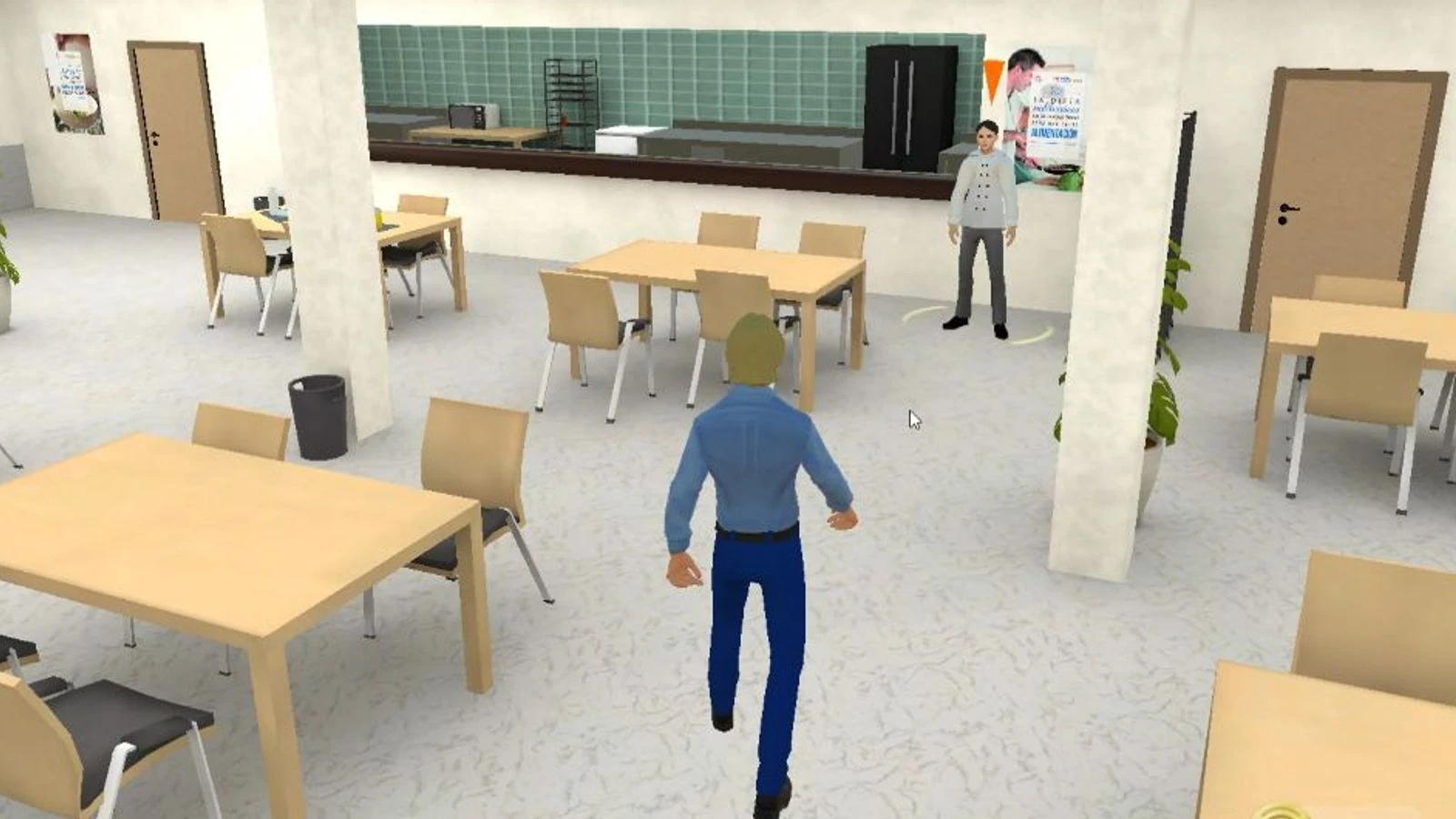
We built a VR forklift simulator (Spanish only) with a physical steering wheel and controls. It has exercises that can be restarted and a review of each run, without automatic certification. We also built an immersive industrial training experience (Spanish only) for practising a work procedure. Its project page is clear that it does not replace real practice or supervision. For the business case, read our article on VR in industrial training (in Spanish).
Frequently asked questions.
No. It prepares people before they touch the real equipment and lets them repeat what they find hard.
Our VR applications start from €4,500, VAT not included. Scenes, interaction, devices and 3D content set the final figure.
Yes. A 2019 meta-analysis found that VR improves health professionals’ knowledge and skills after training, compared with traditional education. Its authors rate the certainty of that evidence as low to moderate. We have not built medical training ourselves.
Yes, most training scenes run on Meta Quest. We move to PC VR when a scene needs more power.
Related projects.
Real OverFuture work on this topic. The project pages are in Spanish.
Benefits of VR trainingVR simulation with physical controlsGamification in educationVR for industry (ES)VR developmentHow to choose a virtual reality companyHire virtual reality developersHow to choose simulation-based VR trainingHow a virtual reality app is madeUnity game development company in SpainGamification for companies