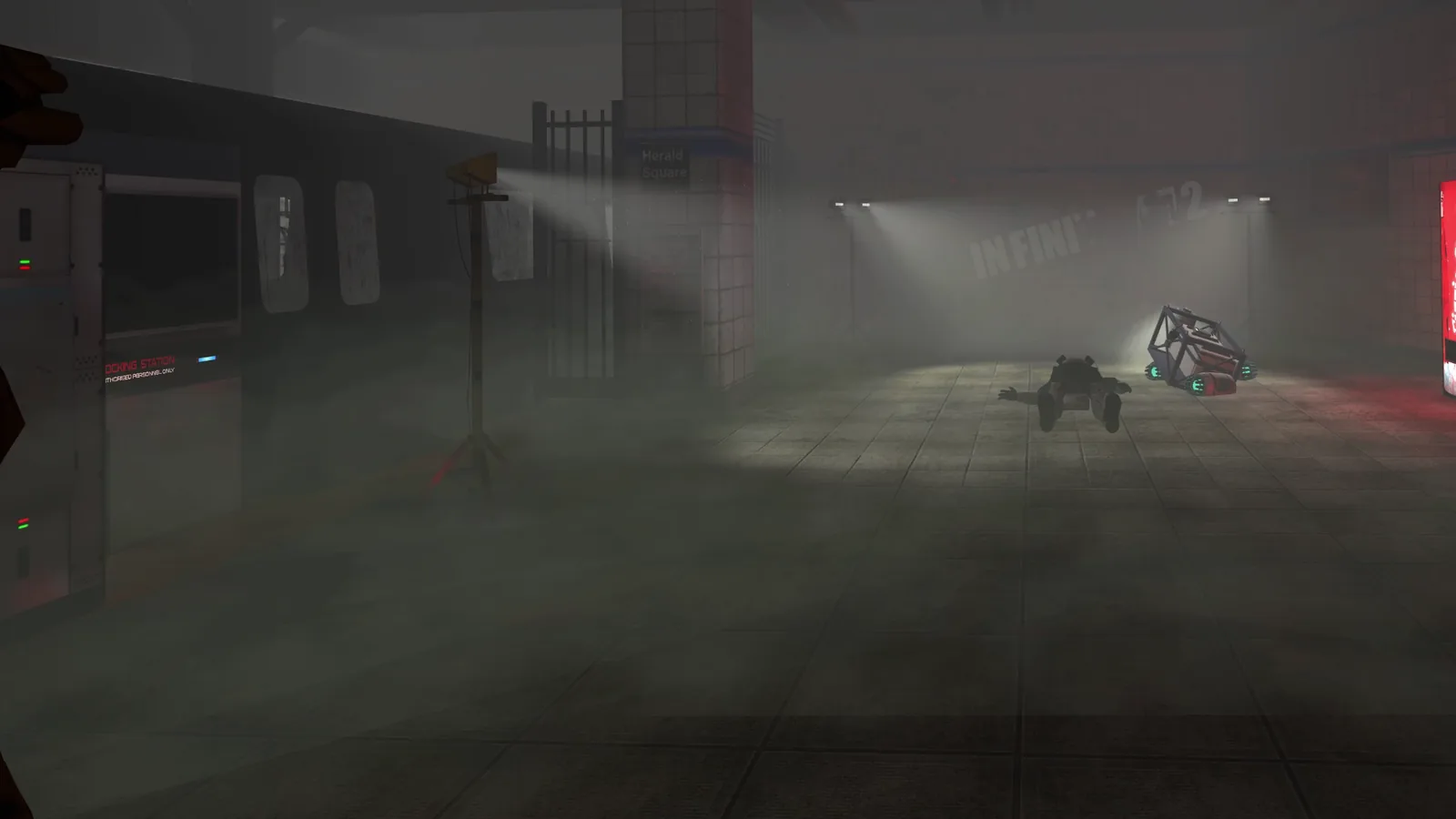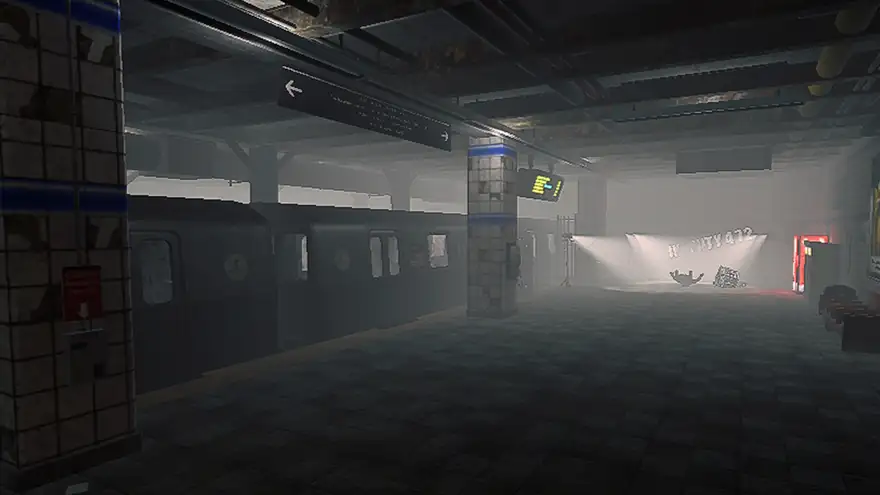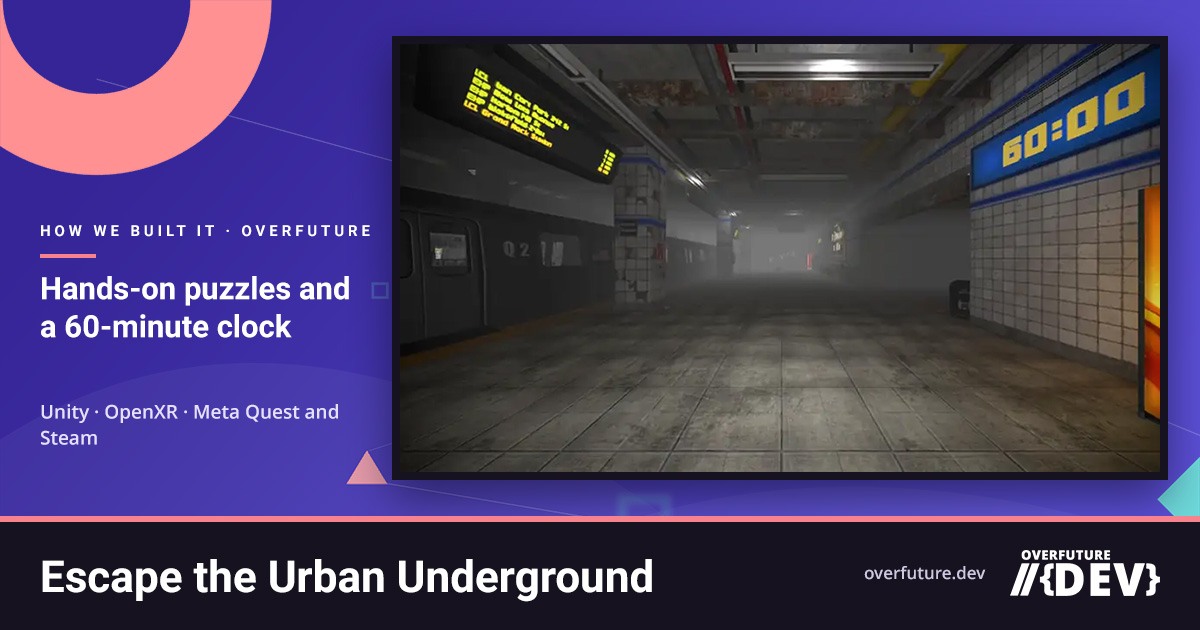
Escape the Urban Underground is a horror escape room built exclusively for virtual reality. You investigate a murder in an abandoned subway station, piece the clues together and look for the way out.
It launched on the Meta Quest Store first and reached Steam in July 2026. If you want to see the game itself, with the 60-minute clock and playable audio of RAID’s hints, it’s all on the Escape the Urban Underground product page. This article covers the part players never see: the decisions, the problems and how we solved them while building a VR escape room.
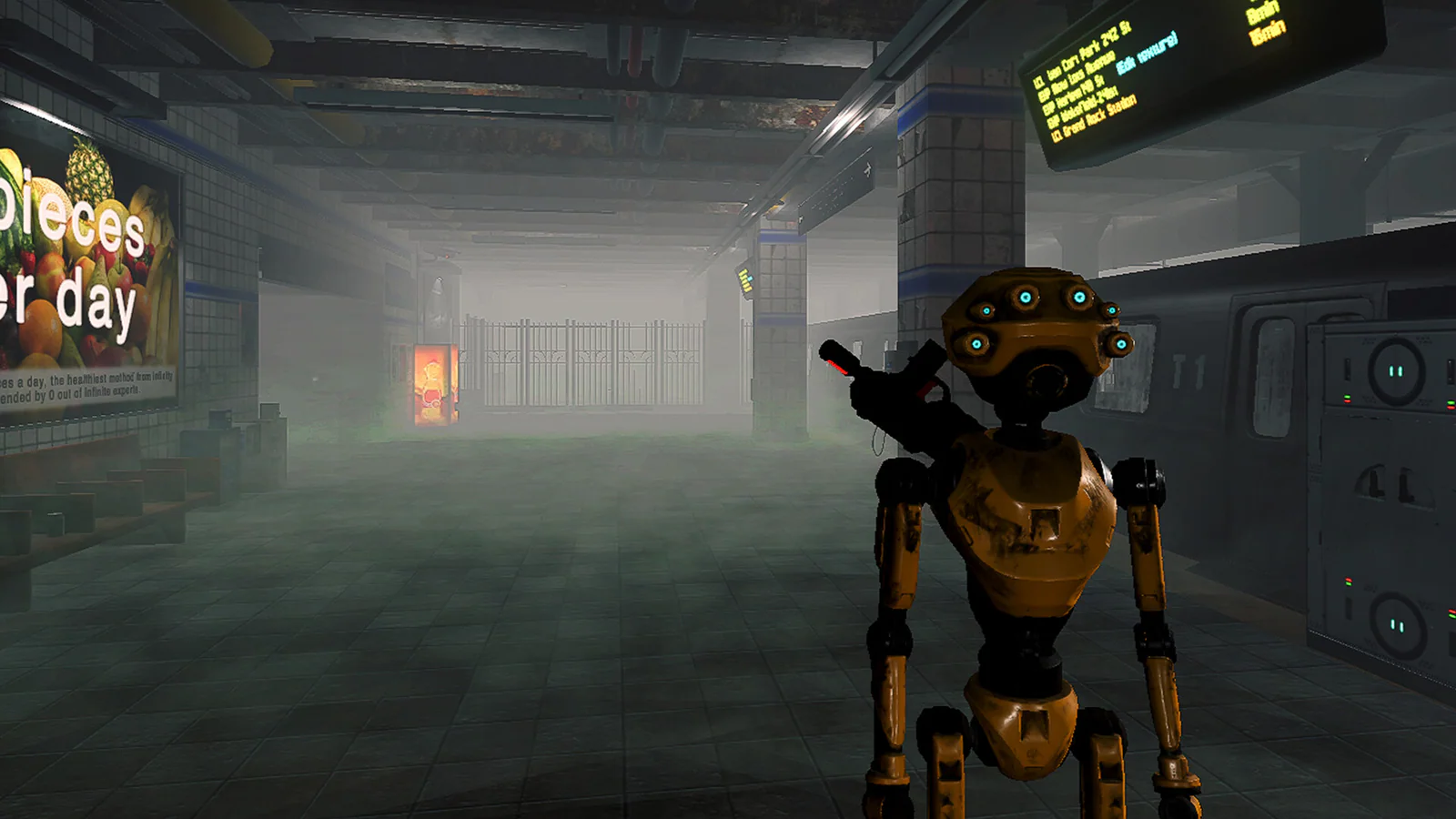
A forgotten station and a murder to solve.
Beneath a city that never stops making noise, a subway station has been cut off from the world for decades. A murder has just taken place on its platforms and, as soon as you start investigating, you realise you’re not alone. The game combines exploration, observation and hands-on puzzles in an underground setting designed to keep the tension up until you find the exit.
The story starts somewhere ordinary that has turned into a threat: a closed, decaying subway station full of details that don’t add up.
The goal isn’t just to open a door. You have to read the scene, work out what happened and keep moving while the sense of danger grows.
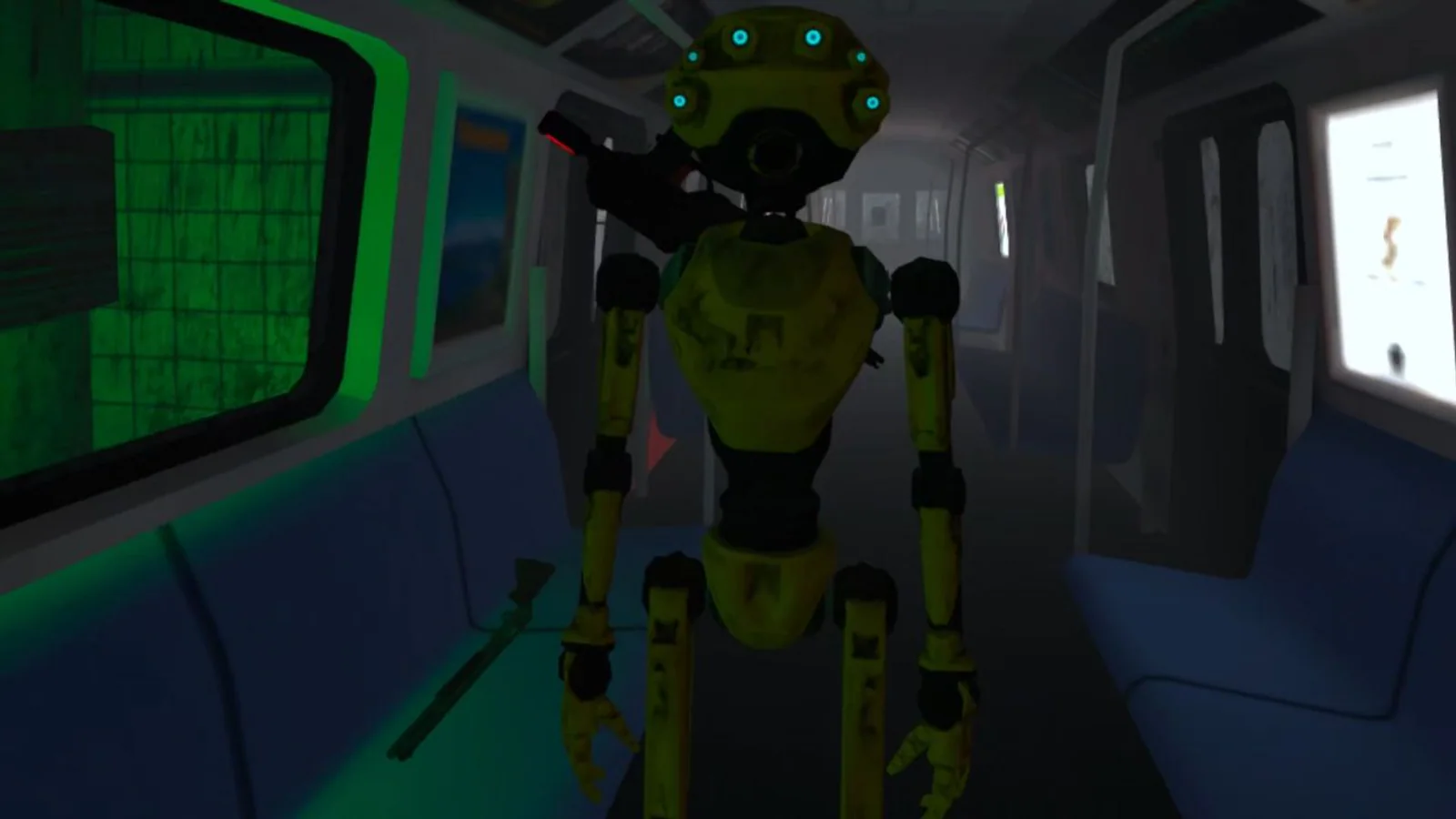
The setting doesn’t separate story from gameplay. The platforms, the rusted terminals, the blocked carriages and the piled-up debris are part of the route. They also hold the information you need to move forward.
Puzzles built for your hands.
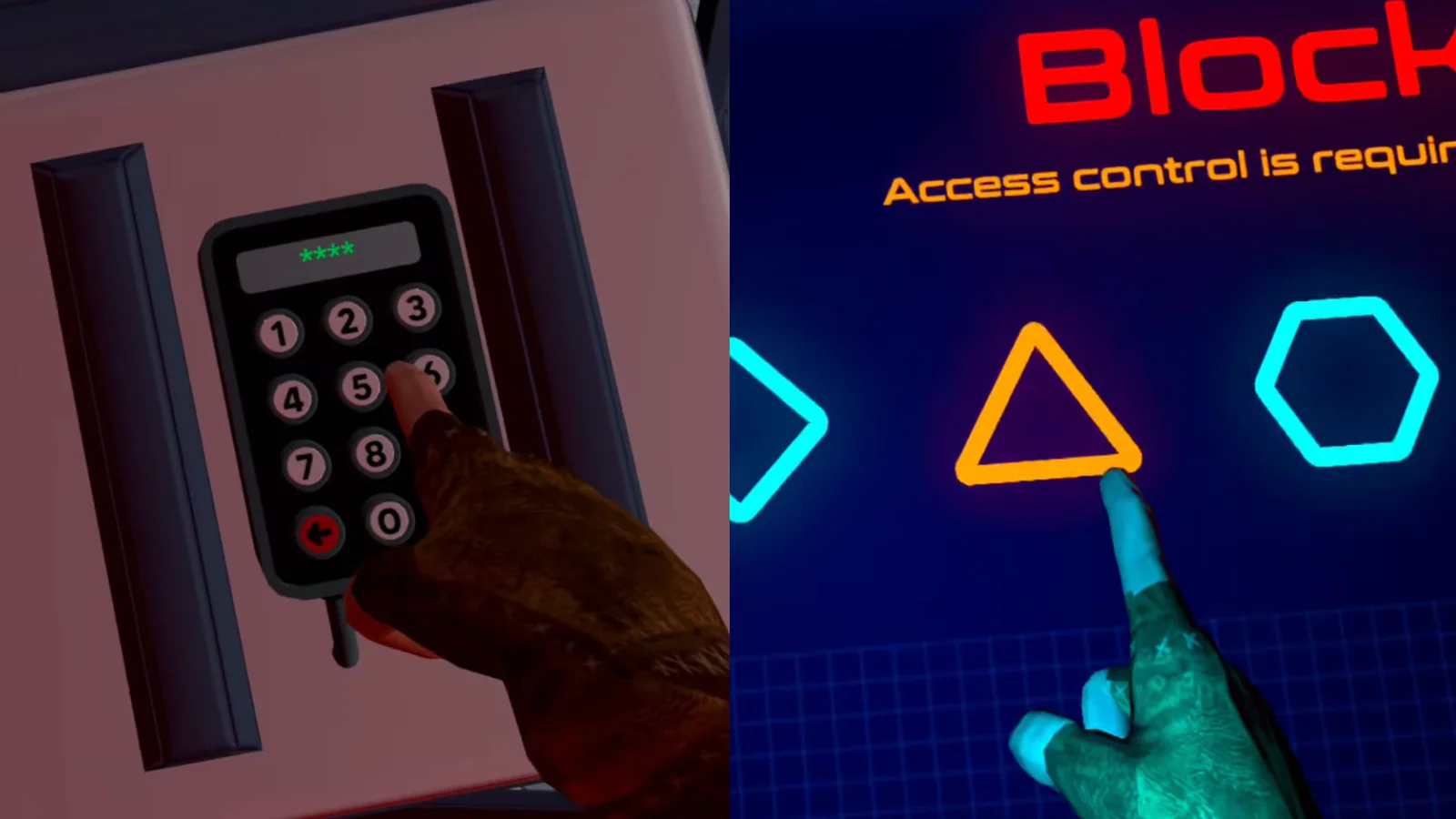
Escape the Urban Underground leans on the kind of interaction only virtual reality offers. You inspect the environment up close, restore power to transit terminals, solve geometric security panels and make your way through claustrophobic carriages full of obstacles.
Every challenge asks for logic, attention and speed.
The clues are tied to the space, so looking, touching and connecting objects matters as much as understanding the mystery behind the murder.
The crime gives the exploration its context and turns every find into a possible piece of the puzzle. You don’t get a to-do list detached from the scene: you have to examine what’s left on the platforms and decide which signs can help you continue.
The route also shifts in scale between open areas and tight spaces. Going from a run-down platform to a carriage full of debris keeps the investigation tied to the place and makes you look at the environment from new angles.
For all of that to work, the hands come first. They run on HurricaneVR, a physics-based interaction system for VR, and we built the station’s mechanisms on top of them. Nothing is solved from a menu.
How we made the clock talk.
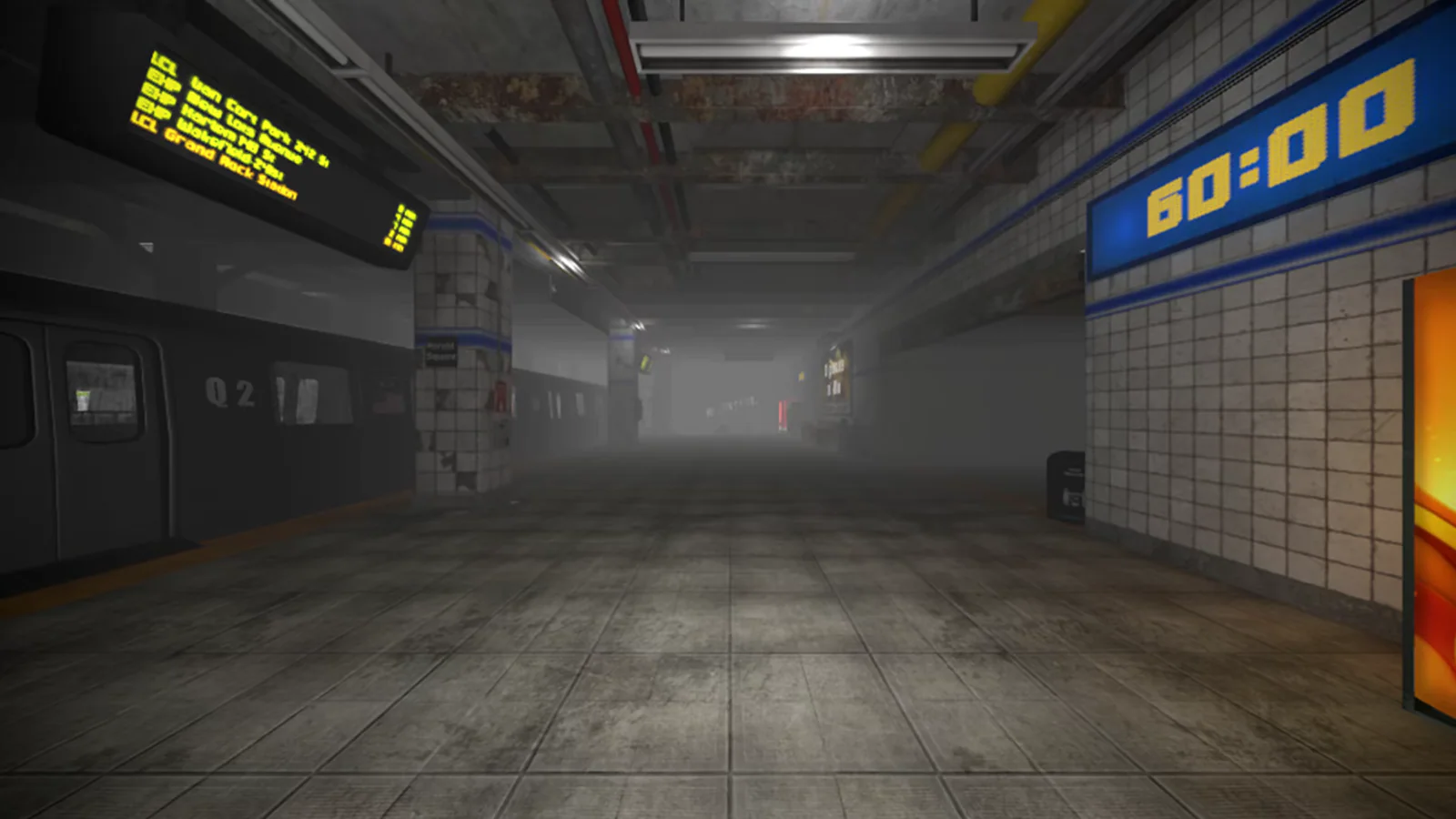
The original game had no saves and no checkpoints. Walking into the station started a single attempt of up to 60 minutes. The menu spells it out in one line, telling you there’s a single session and that leaving means starting over.
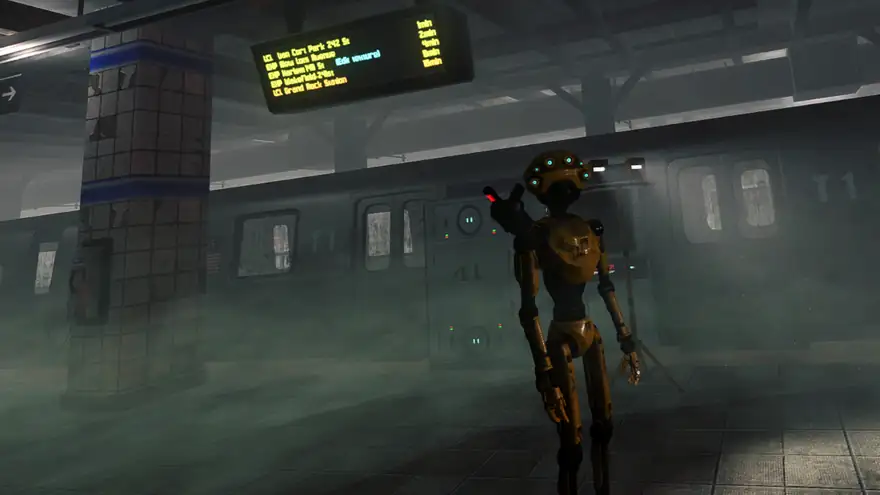
The clock couldn’t just be a number on a wall. RAID, the assistant that accompanies the player, calls out the time when there are 45, 30 and 15 minutes left. When the clock hits zero, the final audio plays and the session ends shortly afterwards.
There’s a technical detail you can feel inside the headset. The clock draws its digits without allocating new memory every frame, because in VR any performance hitch is noticeable straight away.
Tension without splitting story and mechanics.
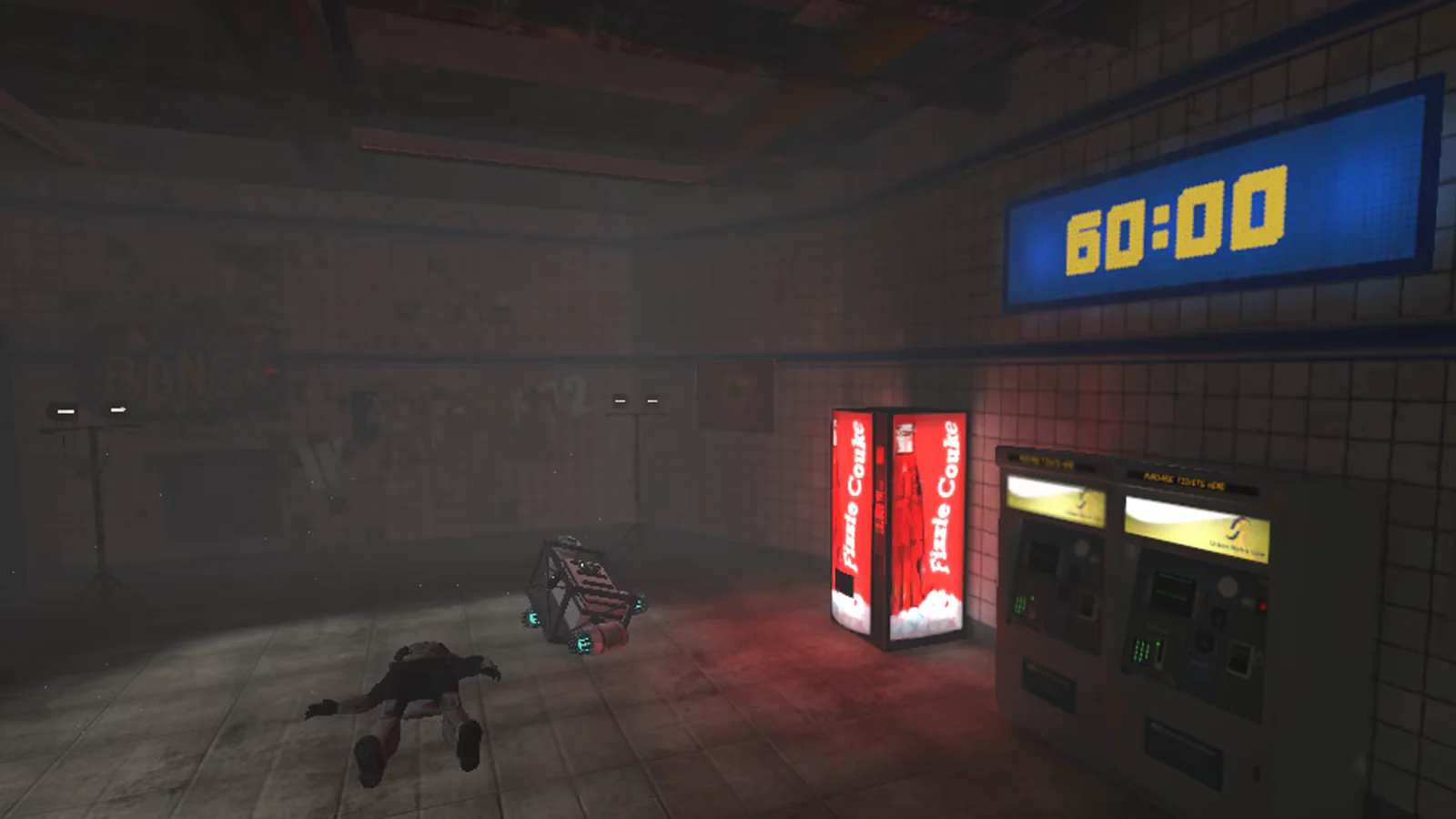
The station relies on flickering lights, distorted audio and shadows that never let you feel safe. None of that replaces the puzzles. It supports the investigation and turns every pause into a decision about where to look or what to try next.
In the 60-Minute Challenge, having no checkpoints adds to that pressure. You can play again as many times as you like, but every run means connecting the clues again and reaching the exit within the time limit.
Saving and resuming in VR without breaking the mystery.
The big update (article in Spanish) added Relaxed Mode, with no time limit and automatic checkpoints. The 60-Minute Challenge stays exactly as it was. The hard part was saving progress in an escape room without the player noticing.
We identified 42 pieces of state that have to be saved and restored, covering zones, puzzles, hints and cutscenes. Every save file carries a schema version, so older saves still load after the game is updated. The 60-Minute Challenge saves nothing; Relaxed Mode saves when you reach a stable checkpoint.
Resuming a game in VR has a problem you never get on a flat screen: where your body is. When you press Continue, the game waits until the headset and controllers are ready and calibrates your height to within 12 centimetres.
Only then does it show the restored station, after a fade to black. And neither the clock nor the objectives start until the player is actually back in the game.
Teaching RAID to help without solving.
From the design document onwards, RAID had one clear rule. It doesn’t help with any puzzle or objective, but it gives you spoken hints when you’re really lost or taking too long.
That rule became a hint system with 11 phases and two channels: one automatic, one on demand. Each phase waits between 3 and 8 minutes, give or take half a minute. RAID stays quiet if it’s already talking, if a menu is open or if the player has switched voice hints off.
Once a hint is solved, it doesn’t come up again, even after Continue. In total there are 38 hint lines in two languages, covered by 40 automated tests.
Two stores, five languages and a more stable OpenXR base.
The game is available on the Meta Quest Store and on Steam. The Steam edition is listed as a single-player, VR-only experience. Its official store page shows support for Meta Quest 2, Meta Quest 3 and Meta Quest Pro through OpenXR, as well as Quest Link.
The Steam version runs on PC VR with OpenXR and the SteamVR runtime. The update improved headset recovery after suspend, starting poses and tracking. Long sessions also became more stable.
The game is now available in five languages. English and Spanish have voice-over, UI and subtitles; the other three have UI and subtitles.
If you like escape rooms, mysteries and atmospheric horror, step into the station on whichever platform suits your setup.
558 tests for what you can’t see.
The project has 93 custom scripts and almost 30,000 lines of C#. They’re covered by 558 automated tests across 106 files, spanning Relaxed Mode, the checkpoints, the hands and QA.
Tests don’t replace putting the headset on. But they let us change the save system or the hints without worrying about breaking what already worked.
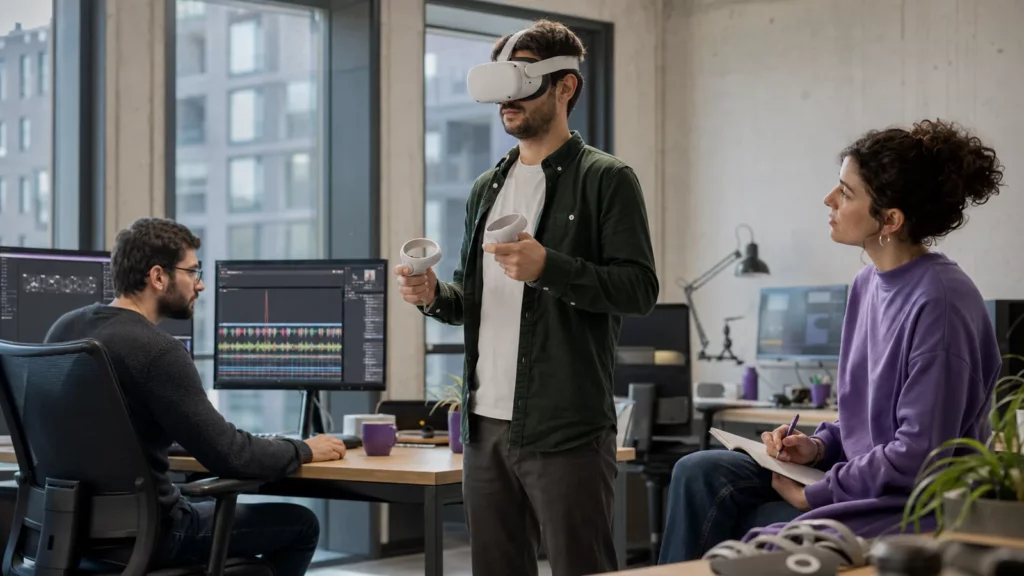
If you’re commissioning a VR experience, ask to see the critical actions early, in the headset and with your own hands. And ask what happens when the user takes the headset off halfway through a session. In this game, Relaxed Mode handles it with Continue and with headset recovery after suspend.
What we learned building a complete VR game.
Escape the Urban Underground meant coordinating locomotion, hand interaction, puzzles, lighting, sound and performance as parts of a single experience. A good decision in one scene could break the pacing or the comfort of the next. That’s why we tested the game as a complete run and not as a set of rooms.
That way of working carries over to other immersive projects. Prototype the critical actions early and measure the real cost of every effect. And always check the experience inside the headset before adding more content.
The project summary is on its project page, and we wrote about designing the fear in a separate article, how to design immersive horror in VR (both in Spanish). If you have an idea for Meta Quest or PC VR, we build it from Zaragoza, Spain: see our VR development services.