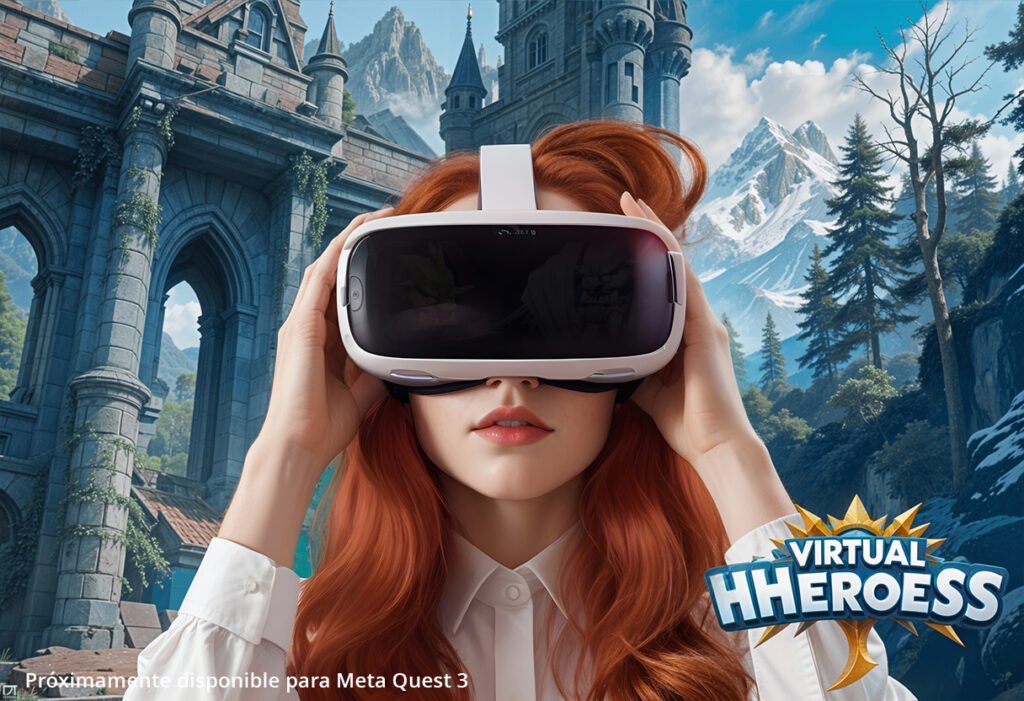
Virtual HHeroeSS is a co-operative virtual reality game for working on social skills and emotional intelligence. It is a project by Asociación ANDAR, from Tudela, and we developed it at OverFuture for Meta Quest 3, together with the association’s psychology team.
This article covers what it took to build a VR game with conversational AI for professional sessions. It looks at the design decisions, the voice conversations and the two-player play. What the tool is and how it is used is on the Virtual HHeroeSS product page. The project summary is on its project page (in Spanish).
From Family HHeroeSS to virtual reality.
The story starts in 2020, when the association decided to create its first video game, Family HHeroeSS, to be played as a family on a phone. In 2023 we made TDAH Virtual Fit (in Spanish) with them, five mini-games for Meta Quest 2.
The earliest versions of Virtual HHeroeSS that we still keep date from June 2024. The project is supported by the Innova Programme of Fundación Caja Navarra and Fundación «la Caixa», and it was presented to the press in June 2025. Its world, PandarA, has six kingdoms and 24 chapters, four per kingdom.
It is designed for children with ADHD and their families, and for any child who wants to work on self-awareness or managing emotions. It is a support tool in the hands of professionals and does not replace therapy.
What the association asked for at the first meeting.
ANDAR’s psychology team wrote the goals, the dialogue and the missions. At the first meeting they were clear about two things they did not want: the player dying, and coins.
That request shaped the design. The main character has no health bar, so they never die. There is no such thing as losing, either. If a potion goes wrong, the cauldron explodes and gives you a fright, but the game carries on.
They also asked for each chapter to tell a story at the start and at the end. Chapters are played in order the first time and can then be replayed, and progress is saved on the headset, in each child’s profile.
Built for the session room.
Virtual HHeroeSS is played by two people, the child and an adult professional, whom the game calls ‘the escort’. We wanted the professional to follow the session without wearing a headset the whole time.
The answer was a laptop connected to the headset over Air Link or a cable. From there, the professional sees what is happening and controls the child’s progress.
Only one type of activity needs the professional to put on a headset: the co-operative puzzle. There were three reasons. Headsets become uncomfortable after a while, they stop you attending to anything else, and the session would depend on the professional being inside the game.
If you are planning something similar, start from what your professionals want to achieve and why they need to control the session. And decide early which data leaves the device, especially when AI and children are involved.
Why four types of activity.
Each chapter is one of four types: combat, quiz, co-operative puzzle or dream world. Combat is never the main point, the quiz is played with just voice and the trigger, and the puzzle forces players to co-operate. The dream world is a voice conversation that the professional controls from the laptop. The product page explains each activity with examples.
A panel only the professional can see.
In the dream world chapters, the child talks to a character and the professional has a panel to assess each answer. They can approve or reject it, and move the conversation on or restart it. The panel never appears on the child’s device.
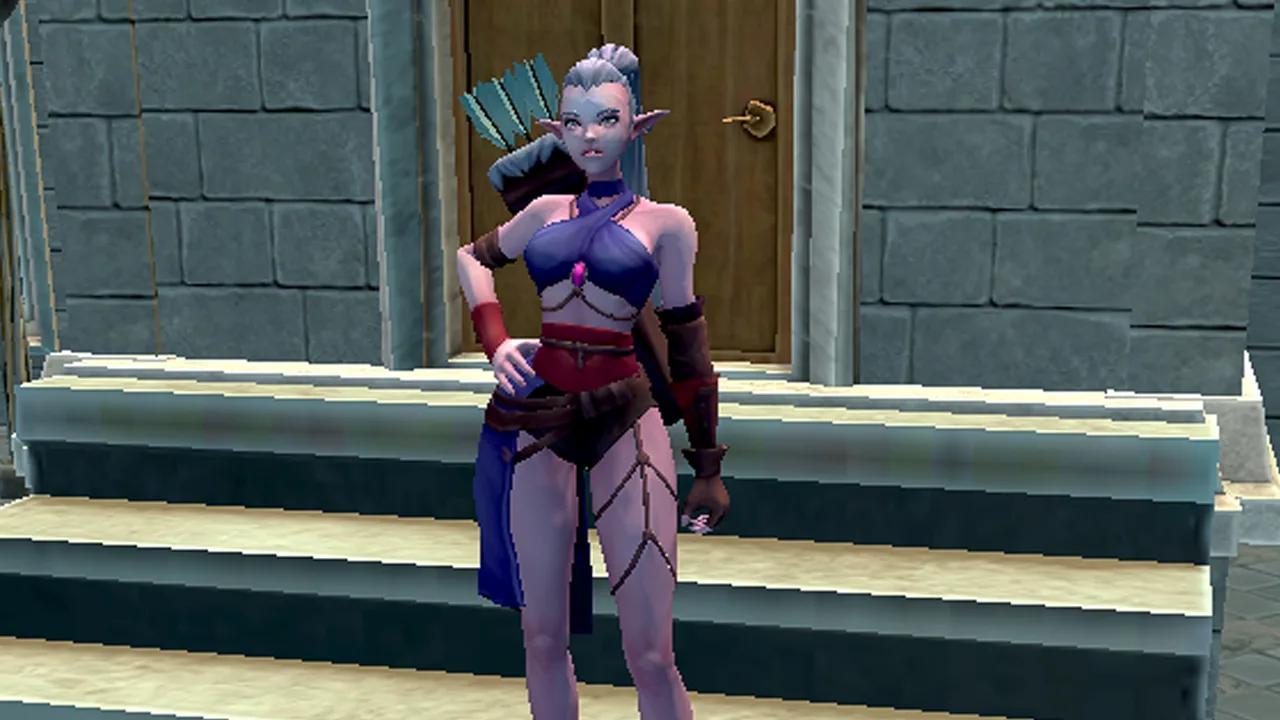
Each chapter has its own buttons. In chapter 4, in the kingdom of humans, the professional marks whether an answer is polite, rude or out of context. After a rude answer, the conversation starts again after a fade to black. In chapter 7, with the elves, they can ask ‘Why?’ as often as they like.
Talking to a character by voice.
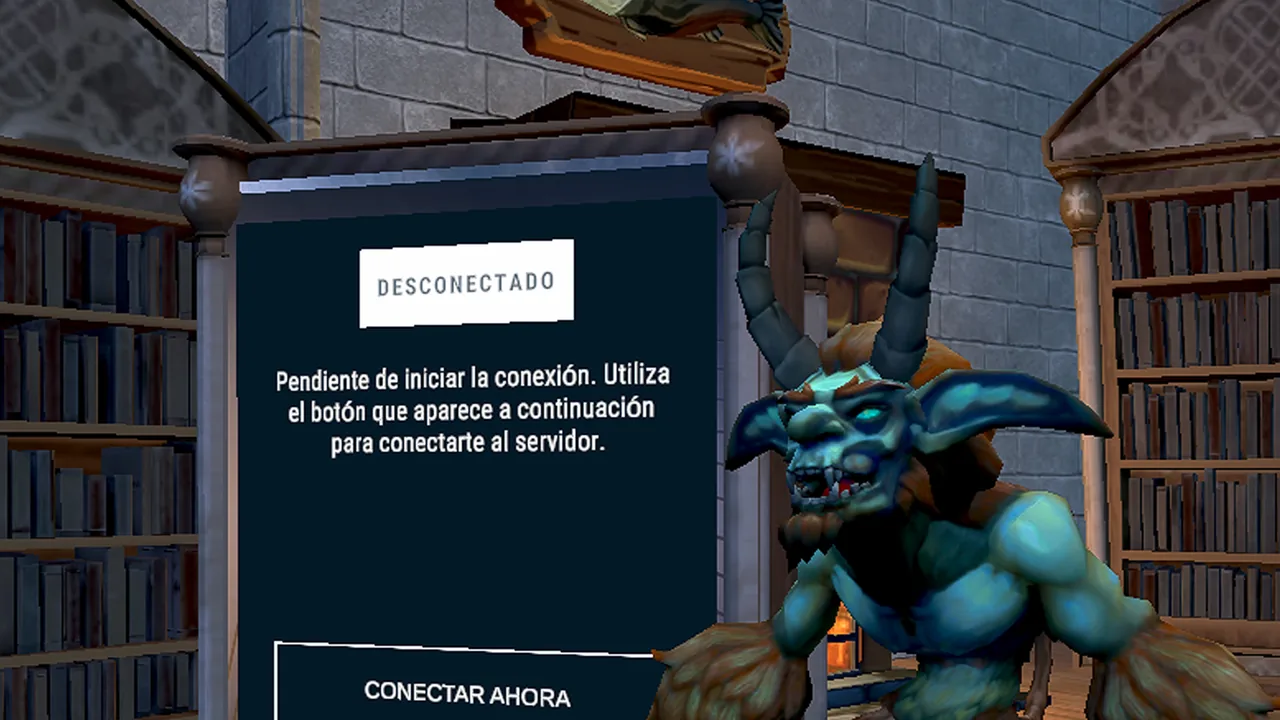
In chapter 5, the child picks an AI companion: a werewolf, an ent or a forest dragon.
To speak, they hold down the A button on the right controller, like a walkie-talkie. When they let go, the game waits half a second before closing the microphone.
Speech recognition runs on the headset itself, with Recognissimo and the Spanish Vosk model.
Each question travels with the chapter’s context, including its title, the current objective and the kingdom.
OpenAI generates the reply and Overtone gives it a voice. The code also has a second path with a local model, LLMUnity.
The most important decision was what leaves the headset. Only the transcribed text of the question goes to OpenAI, along with the character’s instructions and the chapter context. Neither the audio nor the profile name is sent.
Why everything is told through voice.
We decided to remove almost every menu and tell everything through audio. The first time you enter the game, characters start talking to you. Each character has its own voice, generated with AI in ElevenLabs and then shaped in Audition.
Characters move their lips and show emotions with SALSA LipSync. Every line of the story has a dialogue ID and an audio ID that points to its file. That is how a 24-chapter story was assembled without losing a single line.
Gerión and Noirón, the giant twins, are two separate characters with voices of their own. They share the same base settings with different modulation.
Playing as a pair.
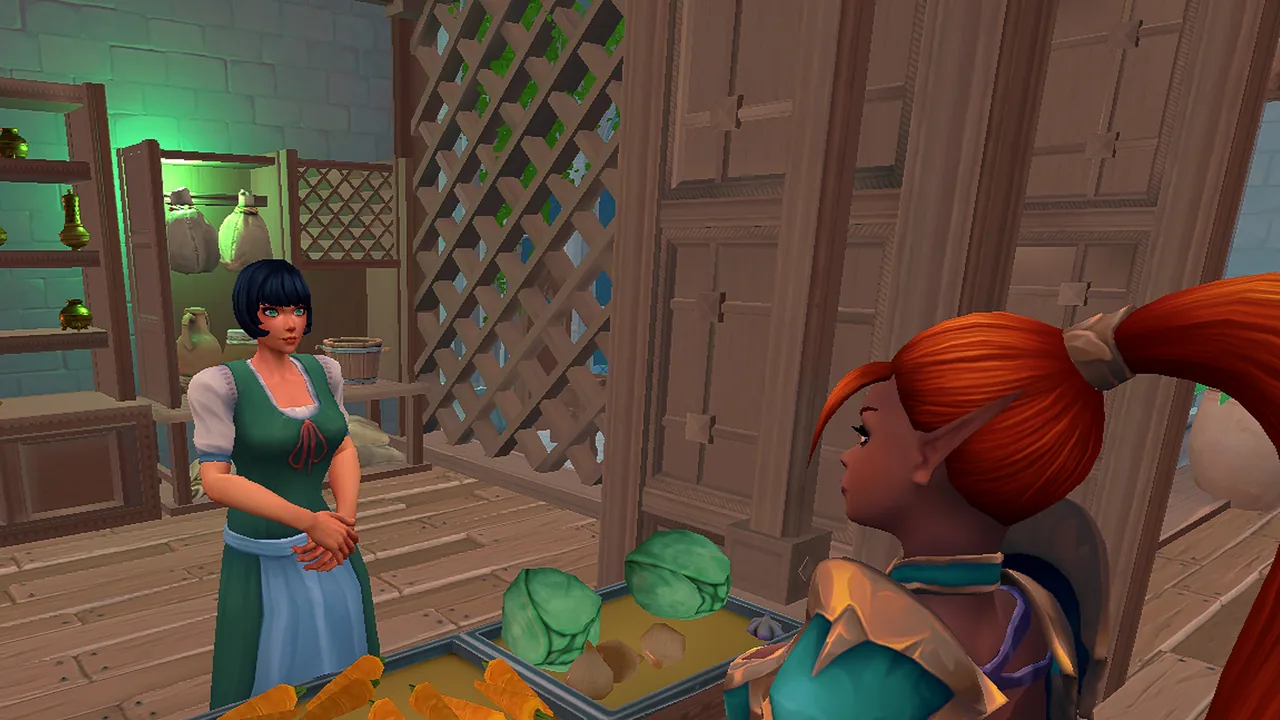
Multiplayer uses Photon PUN 2, with rooms for two players. In the co-operative chapters, the escort and the child connect online, and a guide explains how.
The buttons that must be pressed at the same time are physical objects built with HurricaneVR. The objective is met when the number of pressed buttons matches the number of players. If the child is very young or unsure what to do, the escort guides them.
The game is built with Unity 6, URP and the Meta XR SDK. Behind the 24 chapters there are 14 reusable objective types built on one base class. That is what let a small team assemble so many chapters.
What we learned.
The best technical decision in Virtual HHeroeSS was not the AI. It was putting the professional at the centre. The laptop, the panel and the split between activities all follow from that.
We also learned that, in this setting, AI is useful when someone supervises it and when it knows which chapter it is in. And a world without menus holds together with good voices.
Virtual HHeroeSS is distributed through a private channel, via the association. To see how we approach VR projects, visit our VR development page.