Family HHeroeSS is a game for phones and tablets in which a child plays together with an adult. Together they work on social skills and emotional intelligence. Without the adult, the game does not move forward. That rule, designed by the psychology team at Asociación ANDAR, shaped how we built this educational mobile game.
In 2021 we started this article with an idea: to take each project apart with our colleagues at Androtiyas and explain how it was developed. Family HHeroeSS was meant to be the first, and we are finishing it now as part of the ‘How we built it’ series. What the game is, is covered on its product page and on its project page (in Spanish). Here we explain how we made it.
What the association asked for in June 2020.
HHSS stands for Habilidades Sociales, Spanish for social skills. Development began in May 2020 with the InnovaSocial programme of Fundación «la Caixa» and Fundación Caja Navarra. We built it with Androtiyas, Aitor Román’s studio, which programmed it.
The design meeting in June 2020 produced the ideas that shaped the game. It had to be shared with a trusted adult, parents had to play with the child or watch them play, and the character had to be customisable.
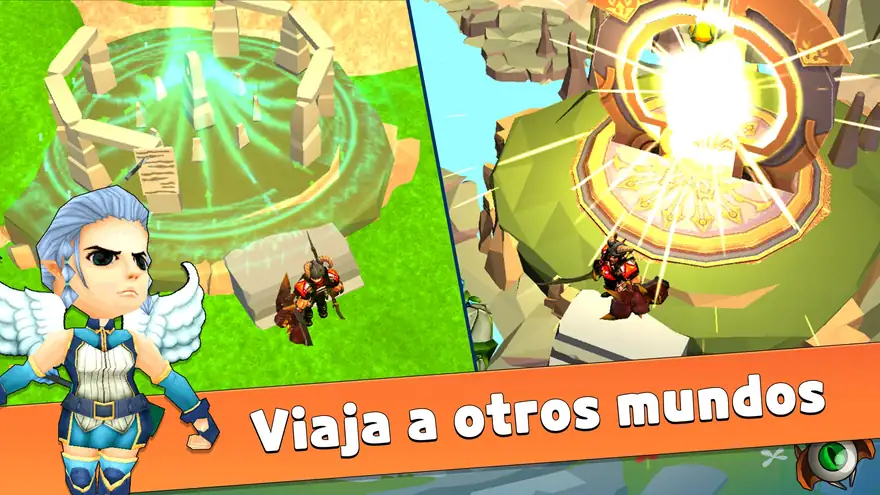
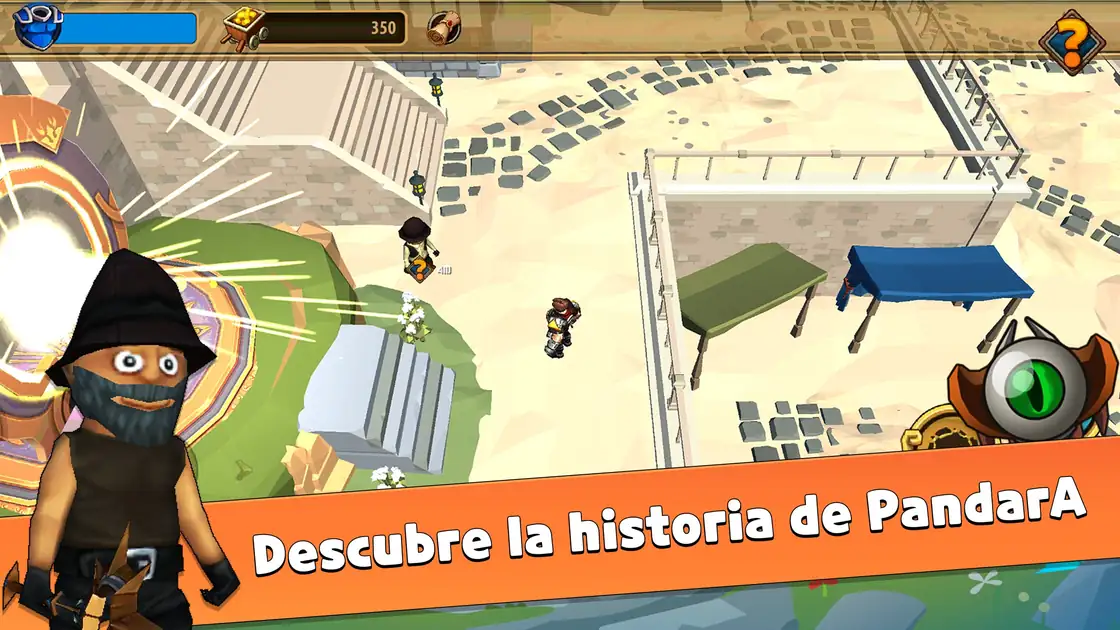
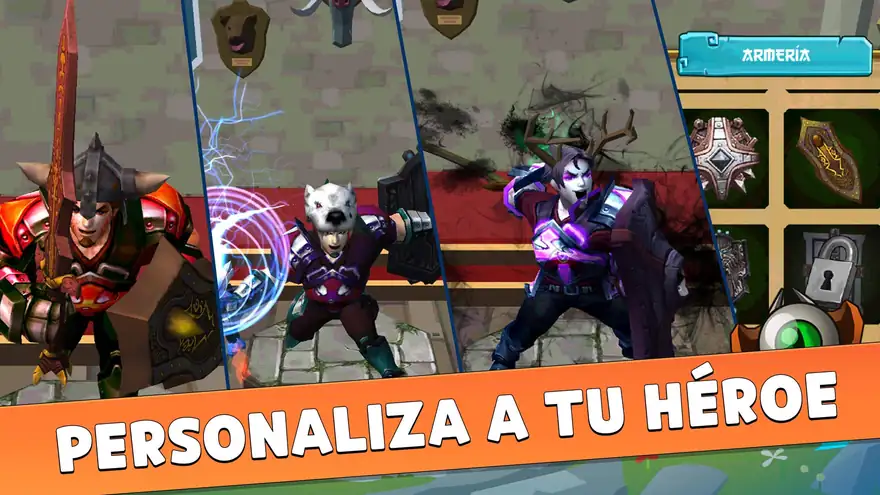
The story came from there too. In PandarA, the adults have forgotten their values and it is the children who remember them. In the end, both sides have to listen to each other and co-operate.
Another decision was not to give the character levels. Its attributes have levels instead, because they are what matters in the game. A short test at the start sets their initial values.
The association presented it in May 2021, at the Lestonnac civic centre in Tudela, as the first co-operative family video game for working on these skills. It is free to play and is now managed by the association itself.
A game that needs an adult.
The idea was to bring the experience of a family board game to video games. That is why it takes two players, a child and an adult, whom the game calls ‘the escort’.
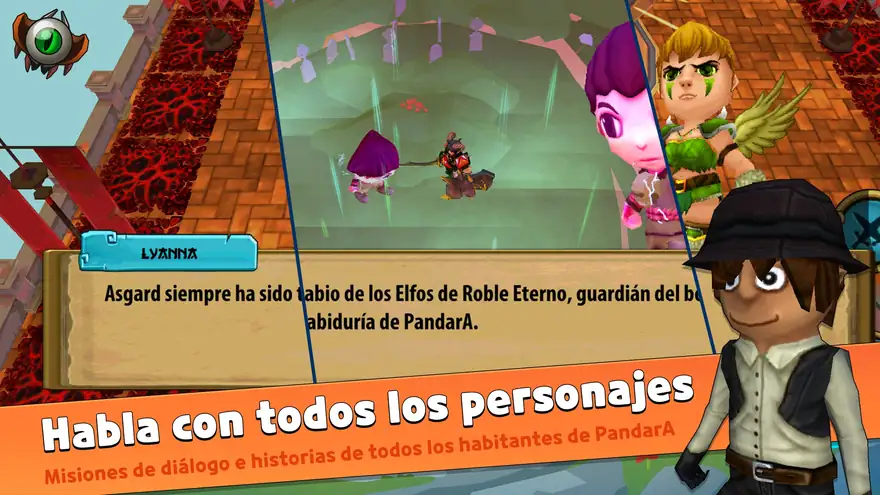
The game recommends always playing with a parent or a trusted person nearby. Some objectives must be completed by the escort. When that happens, a large button appears in the top right corner and the adult takes the phone to complete them.
The escort and the PIN.
We had to make sure the adult really took part, not just that the game said so. The association’s psychology team designed a technique, and we turned it into code.
When a game is created, the adult’s email address is entered. The server generates a secret four-digit PIN and a save code, and sends them in an email signed by the game’s Grand Master. That email recommends playing the tutorial together with the child.
Dream world missions are only completed when that PIN is entered. If it does not match, nothing moves forward. The first real-life mission is exactly that: the child looks for their ideal escort and, once that person agrees, enters the code.
The child creates a profile on the phone and the adult confirms the account on the website. There they find information about the method and the confirmation system. With the save code, progress can be restored on another device.
Missions in real life.
Family HHeroeSS is a game that reaches into everyday life. Part of the action happens in the game and part in real life, and it is then confirmed in the app. Each mission includes notes for the adult explaining what is being worked on.
One of the main missions is going to a shop and letting the child do the shopping alone, from hello to goodbye. Another asks the child to lose a game on purpose and congratulate the winner. A third means sitting in silence for ten minutes and beating boredom.
The side missions follow the same line, such as thanking a family member for an effort or finding an association and a way to help it. Each of the five kingdoms works on one attribute, from friendliness to kindness. They are all set out on the product page.
Missions as data, with events.
Missions were not programmed one by one. Each objective states its type and whether the escort must complete it, and missions carry events that fire as the game moves forward.
An event can bring in enemies or characters, change the music or load another scene. That way, the association’s script was built on one shared system, without writing code for each case.
Voices from the association itself.
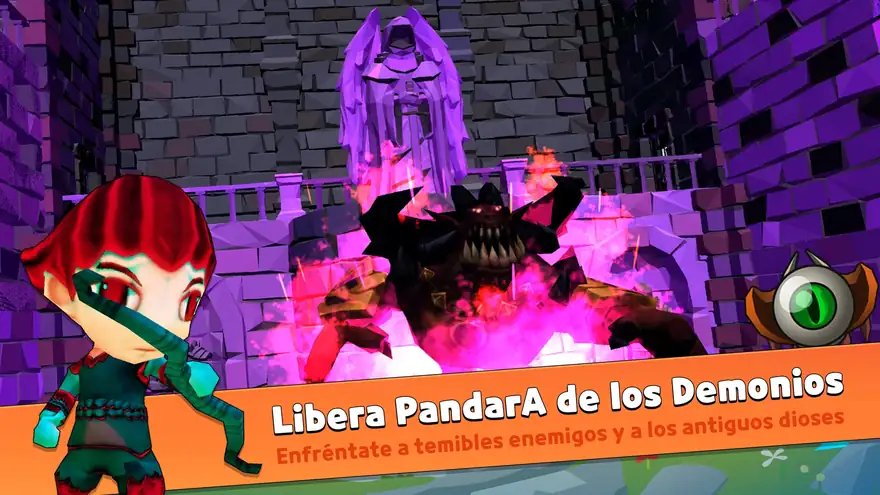
The voices were recorded by people from the association, children included, by the AsdeT theatre group and by friends and family. They were then processed and levelled for the game.
Having characters speak with familiar voices was one more way of making the game belong to the community that would use it.
The technology.
Family HHeroeSS is built with Unity and C#. Accounts, the PIN and progress live on a Laravel server at hheroess.com, and on the phone, progress is protected with Anti-Cheat Toolkit.
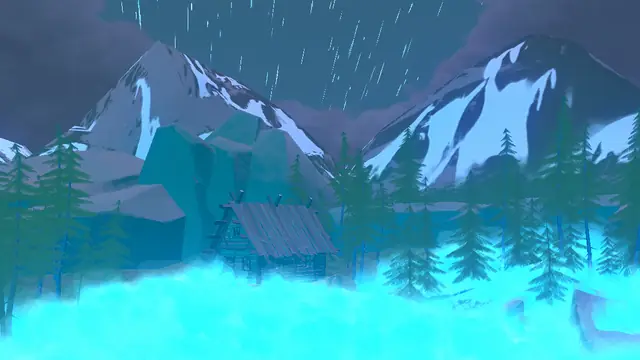
The world has five kingdoms, each with its own town and its outdoor area or dungeon, plus a tutorial and a final battle against KAOS.
The first thing we settled was not the technology. It was who had to play and what had to happen away from the screen. The PIN, the escort’s objectives and the events all came from those two answers.
What we learned about educational mobile games.
Family HHeroeSS taught us that an educational game holds together when the technology serves a clear teaching idea. Here, the idea was that parents and children play together, and everything else follows from it.
Its successor is Virtual HHeroeSS, the virtual reality game we later made with the same association. We apply what we learned to the educational games we build from Zaragoza, as explained on our page on gamification for education and training.